

Episode 1.13: Apocalypse Pork: Feral Pigs
“30% Wild” podcast episode summary
Conquistadors, pulled pork, and an invasive species “bomb,” as we follow feral hogs through the centuries and across the country. Where are wild boars now, is eating them the answer, and what is and isn’t dangerous about wild swine?
We also get a passenger’s view on a very specific 16th century Caribean cruise.
Peggy Anesi, an educator on natural resources, environment, and energy with
University of Illinois Urbana-Champaign Extension, reveals why feral pigs are an ecological and economic disaster on the hoof, and why every city needs their local coyotes.
- Wild pigs, razorbacks, feral hogs, wild boars, and how they got here
- Why so destructive, worst of the worst invasives, global threat,
- Rototillers gone wild!
- The trials of designing a book cover, or why the feral pig is perfect urban neglect mascot
- Who to call if you see a pig out of place, and why you should
- Feral pigs traveling up the highways
- How to get rid of feral pigs, and how to make it impossible to get rid of them
- Let’s eat invasives! Or maybe not?
- A city kid meets the forest
- Grieving wolves wandering the industrial (!) Midwest
- On the trail of a mysterious – and huge – beast
- Plus bonus insights on urban coyotes, bears gone exploring, and carrying a pocket knife in mountain lion country
- Includes the original story, “First Step,” a coming-to-America story from a long time ago
To learn more about “30% Wild: Scary Animals in the Backyard,” go to our website at thirtywildpod.com, where you can listen to all episodes and subscribe so you don’t miss anything


Peggy Anesi is an Educator on Natural Resources, Environment, and Energy with University of Illinois Urbana-Champaign Extension, where she serves Boone, DeKalb, and Ogle counties, just west of the Chicago suburbs. Peggy holds a Master of Education from Northern Illinois University, where she specialized in curriculum and instruction. She also has a Bachelor of Science in Zoology with a specialization in wildlife management from Southern Illinois University, Carbondale.
She’s been teaching environmental education for over 25 years, to both kids and adults, and is particularly interested in people and wildlife interfaces where conflict can occur, which makes her an ideal guest for us here on “30% Wild!” She’s also focused on helping native pollinators and on water use and conservation, and in fact is a long-time member of the DeKalb County Community Foundation’s Land Use committee and is an Associate Director on the DeKalb County Soil and Water Conservation District board.
When she gets a moment away from all that, Peggy kayaks, hikes, and works on naturalizing her yard.
Please scroll down to the bottom of the page for a full transcript of this podcast episode.
The Rise of the Machines - or Feral Pigs?
Read all about it:
What makes feral pigs so scary and so very hard to control?
Resources and Links
Resources mentioned in the episode and more about feral swine
Feral or wild hogs are present in at least 54 counties worldwide on every continent except Antarctica. Also widespread across Pacific islands. Considered a direct threat to hundreds of other species: https://pmc.ncbi.nlm.nih.gov/articles/PMC8225776/
De Soto’s bringing pigs on his 16th century exploration of North America/how pigs got the Americas generally: https://feralhogs.tamu.edu/introduction-of-feral-hogs-to-texas/
And also: https://www.gameandfishmag.com/editorial/history-of-feral-hogs/191026
Calculation of number of descendants of the pigs that came with De Soto: Assumes one litter/year, 5 piglets per litter (average), with the first pig (sow) living 6 years, assuming even sex ratio.
First Europeans in North America were long before the Pilgrims and Puritans: https://mlpp.pressbooks.pub/ushistory1/chapter/europeans-discover-the-americas/
The current (2025) USDA’s maps of the spread of feral swine over time: https://www.climatehubs.usda.gov/hubs/southwest/topic/feral-swine-bomb
Maps shown on the USDA website may have been changed by the current US administration from those used in the production of this episode.
For more on invasive species and native species generally, check out the “Snakeheads and Sharks” episode
“Wild pigs are identified as one of the “100 of the World’s Worst Invasive Alien Species” alongside other more frequently discussed invasive terrestrial species such as [feral] cats (Felis catus) and rats (Rattus rattus)” https://www.nature.com/articles/s41598-021-92691-1
Genetics of feral pigs and their widely varying physical appearance: https://feralhogs.extension.org/physical-characteristics-of-feral-hogs/
🐷Feral pigs can look like this or this or this kind of cute one or this really big one
Garlic mustard, surely the next big wild food craze, we hope!
Diseases carried by feral pigs.
What’s a prion disease?
Chronic wasting disease, a prion disease in deer
Blue tongue disease in deer
For more about why mountain lions, aka cougars, might be roaming through northern Illinois, AND how to tell a feline track from a canine one, see “Mountain Lions in the East”
Are bears really like giant raccoons? Why do we love coyotes? Listen to “Bear-anoia” and “Never Bet Against Coyotes“
More about invasive species generally and feral swine in particular at www.extension.illinois.edu/invasives and https://extension.illinois.edu/invasives/feral-swine
Or your own state’s extension will have info on invasive species, including feral swine
And: if you see a pig out wandering, call your animal control, or your nearest USDA office!
Credits for the original story, “First Step”
The story, “First Step,” is an original work by me, Susan Dieterlen.
It is inspired by the history of pigs’ arrival in the Americas,
And is a tribute to the incredible drive, productivity, and impact of immigrants of all kinds, whether pig or human like me.
The Complete Collection from Season 1
Every coyote, disappearing farmhouse, and Green Man,
Ready for a campfire near you
Plus “No Heroes,” a bonus story only in this e-book
Credits:
Theme music by Lost Harmonies
Raven audio recording by Tyler Hulett
Other music by Alitu.
Full transcription of podcast episode
[00:00] Speaker A: Land.
[00:01] Speaker B: You can’t see it through the ship’s hull, but the scents are unmistakable.
[00:06] Sweet grass, flowers, the beckoning earth of mud,
[00:10] intoxicating,
[00:12] bewitching compared to the smells of the ship, the sailors and your fellow passengers.
[00:18] The sailors voices are excited, even muffled through the deck. Regardless of what their unintelligible words might be,
[00:25] their footsteps over your head grow faster,
[00:28] lighter, running to stow sails, adjust lines, and launch the landing craft.
[00:33] Waves toss the dinghy as it heads for shore, and you lurch from side to side with it.
[00:39] Other passengers bump you, you bump them, but you’re weary of protesting to each other.
[00:44] Someone snaps at you without conviction, but your eyes, like everyone else’s, are riveted to that brown green shore,
[00:53] willing it closer,
[00:54] already there in your mind.
[00:57] You lift your head and drink it in,
[01:00] free to breathe the open air.
[01:02] It smells like home.
[01:05] Like home,
[01:06] but new.
[01:08] Somewhere entirely new.
[01:12] More babble from the sailors as the hull scrapes the bottom. They jump out, haul in the boat, tie lines. Chaos on the boat. The shoving become violent. Everyone is crying out, and suddenly one of you is over the edge, splashing onto the beach.
[01:25] More follow a torrent now plunging across the sand into the dune grass, the brush, the racing for the tree line. A sailor grabs at you as you scramble off the dinghy, but his hands slip and you break for freedom, Cramped legs stretching, lungs bursting, the pure joy of sprinting flat out,
[01:42] unsteady on the too solid land. You careen into the forest edge, squealing with delight as your feet sink into the duff of the forest floor.
[01:51] Another breath and you are rooting into the earth, fallen leaves flying as you bear. Bury your snout in the rich black soil full of sprouts and grubs and life.
[02:04] The year is 1539,
[02:07] and you’re a pig just released onto the wild coast of what will become Tampa Bay in the state of Florida in 306 years.
[02:17] The ship is Spanish.
[02:20] The sailors are led by the explorer Hernando de Soto, a conquistador about to trek all the way to Texas,
[02:27] scattering pigs everywhere he goes.
[02:31] It’s 68 years before Jamestown and 81 years before the Pilgrim’s Land.
[02:38] By then,
[02:39] that first pig jumping over the side of the boat could have produced millions of descendants.
[02:49] I’m Dr. Susan Dieterlin, and this is 30% wild. Scary animals in the backyard.
[02:55] Speaker A: Listen.
[02:56] Speaker B: Subscribe and support 30% wild@30wildpod.com that’s T H I R T Y wildpod.com Some of my ancestors were here before the Revolution,
[03:11] but Feral Pigs have me beat by a century or two.
[03:17] Once I saw a depiction of the first colonists in the us.
[03:21] It might have been the pilgrims with the first step of that first white European foot making a solemn, momentous thud as it strikes the North American ground.
[03:35] The first step of millions,
[03:38] ground zero of colonization.
[03:42] Leaving aside all the problems with that, like the Norse, the Spanish, Jamestown, the lost colony of Roanoke, maybe someone should dramatize the first pig foot landing on America soil.
[03:54] The hoof that launches a porcine manifest destiny that has spread from shore to shore from Canada to Argentina.
[04:04] If we look at the map from the USDA or the 2024 USDA from 40 years ago,
[04:13] it shows that there were feral swine.
[04:17] Just a note here. People use the term feral pigs. Wild pigs, feral swine, wild boars and Russian bores more or less interchangeably.
[04:27] Feral swine 40 years ago were known to be in 19 states.
[04:32] That was mostly the Southeast,
[04:34] especially Florida, Louisiana. That’s roughly DeSoto’s route. And California.
[04:41] California was also colonized by the Spanish, of course, which seems like it might not be a coincidence in terms of how the pigs got there and became widespread.
[04:52] Flash forward to the current day and the 2025 USDA’s website shows that there are feral swine known,
[05:00] documented and acknowledged to be in 29 states.
[05:05] So that’s from 19 to 29 over 40 years.
[05:10] It is now virtually the entire Southeast.
[05:13] It’s throughout California, throughout Hawaii,
[05:17] it’s parts of 15 other states.
[05:21] And this is your regular reminder that wildlife don’t let us know when they move into new areas. It’s not like they leave a forwarding address. There’s not a welcome wagon rolled out or something like that.
[05:32] So they can often be in areas that we don’t realize.
[05:37] So that 29 states is almost certainly an undercount.
[05:42] It is worth noting towards this end that there are two counties shown on this map from 2025 as not having pigs where I have first hand experience with damage from them,
[05:53] or first hand experience with reliable local reporting with photos of them being in the area.
[05:59] That adds some credibility to my statement that 29 states is almost certainly an undercount.
[06:05] It is usually the case that animals move into new territory stealthily.
[06:10] If things go well, they increase their numbers. And it’s after that increase happens that we become aware of them.
[06:18] That’s also pretty much true of invasive species of all kinds. So it’s kind of a little scenario to keep in mind. That’s if you don’t know, that is probably the playbook that you’re in.
[06:29] This is one more excellent reason to keep your eyes open outdoors and pay attention to what you’re seeing. You could be seeing the first one of an invasive invader.
[06:39] The rough estimate is that there’s about 6 million feral hogs in the US today.
[06:46] 6 million.
[06:48] For comparison,
[06:50] there are about 76 million domestic pigs in the US in 2024, meaning pigs being raised on farms as livestock.
[06:58] That is 12 times to 13 times the estimated number of feral hogs. So the pigs that we don’t really want here versus the pigs that we very much want here.
[07:10] But this is not just a North American problem. Either feral or wild hogs are present in at least 54 countries worldwide. That is on every continent except Antarctica.
[07:24] Just sit with that for a minute.
[07:27] It’s a feral pig’s world.
[07:29] They are also widespread across the Pacific islands and they are considered a direct threat to hundreds of other species.
[07:38] We’ll get to why in a second.
[07:40] You would think that as large as feral hogs are, it would be obvious whether they are around because their average weight here in the US is about 180 pounds.
[07:53] 180 pounds.
[07:55] This is a big pig, but this varies widely and it can be up to hold onto your hat, 500 pounds.
[08:04] A 500 pound pig is not something that’s sneaking around.
[08:09] And they also live in groups. So it’s not that individual 500 pound pig. It is a group.
[08:16] And that 500 pound pig,
[08:18] despite being big and living in groups,
[08:23] you can’t always tell whether they are around. I have firsthand experience with this.
[08:29] A number of years ago,
[08:31] I lived in a small town and one day we came out to discover that it looked like a rototiller had gone crazy in the backyard.
[08:43] Like exactly like this. If you imagine a rototiller coming to life, attacking your backyard and some sort of rise of the machines nightmare,
[08:52] that is what it looked like. And you really ask yourself, how could I possibly not have heard this happening?
[09:00] I came to find out this was damage from a feral pig or perhaps a whole sounder of feral pigs that they’d been out plowing up the backyard while we were sleeping.
[09:11] I never saw a feral pig in that town. I have to this day only seen one feral pig in my whole life,
[09:20] and that was a dead one on the side of the road in Louisiana.
[09:25] So they can be very close to you. You can be living among them and not even know they’re there.
[09:31] Feral pigs are invasive species. They are arguably the invasive species since they are so widespread globally and so damaging.
[09:41] For more in depth about what invasive species are,
[09:44] I refer you back to snakeheads and sharks, the 30% wild episode this season. Generally, the deal with invasives is that they are wildlife or plants or any kind of organism that is out of place.
[10:02] It’s not where it’s supposed to be, not where it originally was. It is geographically in another place and it has gone wild.
[10:09] That it has increased in numbers disrupts the whole ecology of the place. It often disrupts agriculture or kills plants or animals that we want around, like certain songbirds or trees that we like,
[10:24] and we can’t get it under control.
[10:27] Feral pigs are far worse than the average invasive.
[10:31] They have, in fact, been identified as one of the top 100 worst 100 of the world’s invasive alien species by one group.
[10:41] And that brings them right up there with rats.
[10:45] So if you imagine how many rats there are in the world and how much trouble we have controlling them from bubonic plague right up to the current day,
[10:55] feral pigs are up there with rats.
[10:57] The same kind of rototilling action is really key to their ecological threat.
[11:04] I mean, just imagine if what I was talking about, this sort of rise of the machine,
[11:09] you know, animated rototiller attacking your backyard.
[11:12] Imagine if packs of those came to life and started roving the countryside.
[11:16] Just take a minute and think about this,
[11:19] the damage they would do.
[11:21] You’ve got the picture. That’s feral pigs.
[11:24] They can disrupt areas up to two acres in size in one patch. I mean, two acres is enormous.
[11:31] It’s not just that they uproot and kill plants, but they also,
[11:36] because it’s like tilling,
[11:38] allow in weeds and invasive plants,
[11:41] just like you would do if for some reason you wanted to root up your yard and plant it with invasive plants, this is exactly how you would do it.
[11:50] They also do the same thing to farm fields and pastures. So feral pigs are an enormous agricultural pest. And again, this is worldwide.
[11:59] Unlike those rototillers come to life, feral pigs multiply, and they are really good at it.
[12:07] They reproduce quickly, they mature early, and they have large litters of little piggies.
[12:12] And I will admit it, the little piggies are really pretty cute. But that’s neither here nor there. They’re still really destructive.
[12:19] Feral pigs can adapt to nearly any habitat worldwide. They live in all kinds of habitats, from deserts to wetlands to forests. So there’s kind of not anywhere that’s safe from them.
[12:32] They are very hard to get rid of once they are entrenched.
[12:37] So most control efforts towards them focus on Kind of the leading edge. It’s like the frontier of pigs.
[12:43] You will immediately see that that means it’s very important to be able to tell when they move into an area.
[12:52] Most of the species we Talk about on 30% wild we’re cheering for, even if we find them scary.
[12:59] The return of wolves, cougars, that kind of thing, definitely. Bald eagles is a massive victory for ecological health, for rewilding, even for the survival of a vital top predator. In an era of mass extinction, this is something to feel good about.
[13:15] Feral swine are the exception.
[13:19] And also that earlier episode I mentioned, snakeheads and sharks.
[13:23] What are these creatures anyway? What are feral pigs? As I said at the top of this section,
[13:30] there are a lot of different names for these critters. People call them wild boars, they call them razorbacks, they call them feral pigs, feral swine,
[13:38] Russian borers, All of these are kind of the same thing.
[13:43] It’s a bunch of different creatures that are all dumped in the category of pigs running wild and taking over.
[13:50] This can include escaped domestic pigs. So like Old McDonald’s Farm, one of the piggies gets loose and runs off. Although there are not very many old McDonald’s farms around these days,
[14:02] this is also like our pioneering swine in the First Step story at the beginning of this episode.
[14:08] Over the centuries, those domestic pigs weren’t all the same breed either.
[14:13] Because pigs aren’t just pigs. They have changed over the centuries. They’ve been bred for different things.
[14:18] Different settlers arriving in North America and other parts of the world brought different breeds with them. It’s also been 400 years since those pigs arrived here. So domestic pigs themselves have changed.
[14:31] Kind of our perfect pig for raising for meat has changed in 400 years.
[14:37] A big point in this is that pastured pork, which you may find around you at sort of high end farmer’s market,
[14:45] is an old idea that’s back again.
[14:49] The idea of just letting your pigs run to look after themselves was the way that people raised pigs for a long time in this country when it was all small scale and, you know, raising pigs for your own consumption.
[15:03] That required pigs that could fend for themselves and survive the weather,
[15:07] as compared to pigs that are suited today to intensive factory farms or that are bred to grow really quickly and have lean meat. Our preferred pig has changed quite a bit over the centuries.
[15:18] That means there’s more genetic diversity among these escaped pigs that are now feral hogs.
[15:24] Also,
[15:26] our feral pigs descend from wild Russian or Eurasian boars that were intentionally brought for hunting and then escaped from game parks. And that kind of thing.
[15:37] And since they’re the same species, they can and they do interbreed.
[15:41] What this means is that there is tremendous variation in the way that feral pigs look.
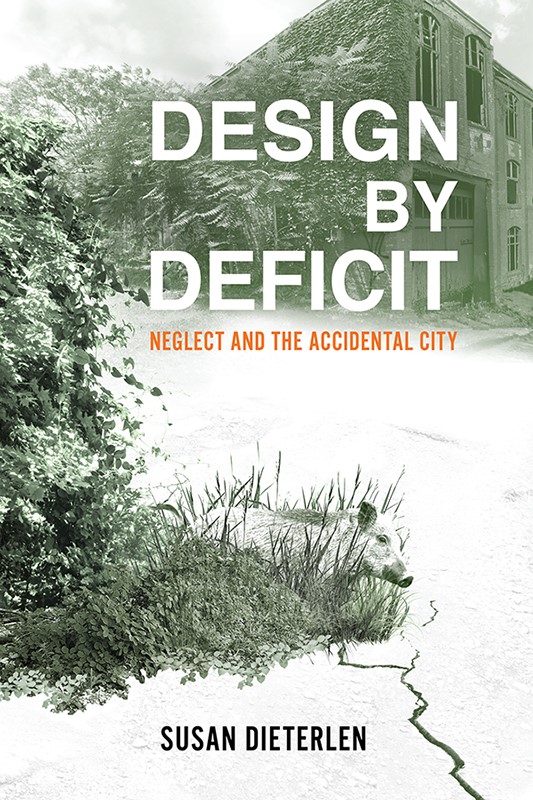
[15:49] And if I lost you in all of that, perhaps this will bring you back. I have a little book writing story here which you probably didn’t see coming. My book, designed by Deficit,
[16:01] has kind of the feral pig as the mascot of it. There’s pig on the COVID And this book grew out of a class that I taught, a university class called City Wild Seminar that also had a feral pig as the mascot.
[16:17] It was on the flyers for the class.
[16:19] And the reason why the pig is the mascot for both of these is because both CityWild and designed by Deficit were really focused on unintended consequences happening in cities by us taking our eyes off of what’s going on.
[16:36] So basically you stop looking and things fall apart.
[16:40] But while some things, things we build are falling apart,
[16:44] other things,
[16:46] like invasive creatures,
[16:49] really benefit from us not paying attention to what’s going on.
[16:53] And we find out that some aspects of nature, some plants, some animals,
[17:00] a lot of invasive species can really take over a lot of area and thrive when we’re not paying attention to them.
[17:09] And how that changes the city.
[17:11] And there’s more about that on the website if you want to know more about it.
[17:15] There is also a picture of the COVID of Design by Deficit. And I have that in there because I have that in there because searching for that pig for the COVID was a substantial task.
[17:31] And when you think about, oh, I’d love to write a book, this is not what you think of.
[17:36] But there’s all kinds of these weird little tasks that end up occupying all your work time for weeks and weeks when you write a book.
[17:47] And this was one of them, was finding kind of the perfect cover pig.
[17:51] I will tell you the pictures that I found online because again,
[17:56] the only feral pig I’ve ever seen in real life was a dead one on the side of the road in Louisiana. I didn’t take a picture of it because even I am not in the habit of taking pictures of roadkill or.
[18:05] But also that was years before this. And, you know, you never think, hey, maybe someday I’ll write a book and want to put a feral pig on the COVID Yet here we are.
[18:16] So I was looking around the Internet and I found all these different pictures that I saved for it. Like, well, here’s a good one. Here’s a good one. And there were some other little details about it that were important like, you had to be able to see most of the pig.
[18:33] It had to be in some situation where you could cut it out and paste it onto a background. So there were kind of some technical aspects like that.
[18:45] The pictures that I got were really weird.
[18:51] You would never think they were the same animal. I mean, if you picture to yourself a wild boar,
[18:56] there’s an image in your mind.
[18:59] But when you go to pick out a single picture as the representative pig of all pigs, it’s really tough.
[19:10] So I have some pictures on the website of these different pigs and you could really see what I mean. Like, some of them almost look like little cows,
[19:22] and some of them look very much like barnyard pigs.
[19:26] You know, you think they’ll have big tusks. They don’t always. You think they’ll have a lot of hair. They don’t always.
[19:33] The final cover pig on Design by Deficit is a compilation of several photos that my cover designer did to kind of put me out of my misery.
[19:42] It is recognizably a pig because this is important. When somebody looks at the book cover, they need to think, that’s a wild pig,
[19:49] yet it’s definitely wild. It doesn’t look like it just walked out of the barnyard.
[19:54] And it looks out of the COVID with kind of a sly, knowing yet not unfriendly expression.
[20:02] So,
[20:03] as I said, there’s a picture of the COVID on the website.
[20:06] There’s pictures of these other sort of rogues gallery of wild pigs. So you can see why this was so challenging. You can see all of that@30wildpod.com.
[20:26] Speaker A: No prints, but the stride of the run was easily 10ft.
[20:32] Easily.
[20:34] It was. It was big, you know,
[20:37] and headed right to the woods. And I thought you, I want to follow it, but it’s probably long gone.
[20:43] Speaker B: With me today is Peggy Annecy, an educator on natural resources, environment and energy with University of Illinois Urbana Champaign Extension, where she serves Boone, DeKalb and Ogle counties. For listeners who are unfamiliar with Illinois, these counties are in the northern part of the state, just west of the Chicago suburbs,
[21:01] and they contain some Chicago excerpts. Peggy holds a Master of Education from Northern Illinois University, where she specialized in curriculum and instruction. She also has a Bachelor of Science in Zoology with a specialization in Wildlife management from Southern Illinois University, Carbondale.
[21:18] She’s been teaching environmental education for over 25 years to both kids and adults and is particularly interested in people and wildlife interfaces where conflict can occur, which makes her just the ideal guest for us here on 30% wild.
[21:33] She’s also focused on helping native pollinators and on water use and conservation. And in fact is a longtime member of the DeKalb County Community Foundation’s land Use Committee and is an associate Director on the DeKalb County Soil and Water Conservation District Board.
[21:47] When she gets a moment away from, from all of that, Peggy kayaks, hikes and works on naturalizing her yard.
[21:54] Welcome to 30% Wild Peggy Annecy.
[21:58] Speaker A: Well, thank you, Susan. It’s so fun to be here.
[22:02] Speaker B: Great. So what is your biggest worry about the presence or spread of feral pigs?
[22:10] Speaker A: Well, I think that my biggest concern is, you know, we aren’t too afraid of pigs. You know, pigs seem to be that cute, chubby farm animal,
[22:19] but our feral pigs, our feral swine,
[22:23] if allowed to,
[22:25] could do more damage than any other invasive species, plant or animal we’ve ever had.
[22:31] Speaker B: Wow. What’s the outlook like for feral pigs or feral swine?
[22:36] Speaker A: Generally,
[22:38] they think there’s, there’s suspect to exist in 45 states already.
[22:43] And the highest population densities occur in Texas, Florida and California, each with populations nearing or exceeding a million individuals. It’s already out of control.
[22:53] So they’re there and they will eventually, you know, move. They have legs.
[22:59] But that, that concern,
[23:02] they aren’t going to be able to get theirs potentially under control. So we have to control it from,
[23:07] from the fringes. Right. We don’t want them to,
[23:10] to come up into other or over into other states.
[23:16] Speaker B: What is the best thing that could happen for the whole feral swine situation?
[23:22] Speaker A: Oh, if only we could come up with a way to make them some kind of like ginseng where they’re so special that you’re not supposed to take them, leave them alone and everybody would want one.
[23:32] Speaker B: Or like ramps.
[23:33] Speaker A: Yeah, yeah, exactly. I say that about ramps. Garlic mustard. I like, I want garlic mustard to become a delicacy so badly.
[23:41] I even have pesto recipes. Right. And it would go great with pork.
[23:46] So,
[23:48] you know,
[23:49] the chances of these animals evicting themselves is pretty not, you know, pretty zero.
[23:56] How those, how those states are going to get them under control,
[23:59] we just the need of a number of people it would take and there.
[24:04] I don’t know that it’s going to be anything they’re going to be able to fixed. Matter of fact, there was a quote one time on from a guy in Texas and he’s like, we’re not going to be able to barbecue ourselves out of this one.
[24:15] Right. Oh, I love that quote. I know. And I. It was just this thing that flew by and it was his face and it was just, he was like giggling about it, but I’m like,
[24:22] yeah, buddy, that’s not, that’s not good.
[24:25] Yeah, yeah, that, that’s pretty serious. The thing is with feral swine, they are extreme habitat generalists.
[24:33] So what that means is they can live virtually anywhere as long as water’s present,
[24:38] because they are opportunistic omnivores, meaning they eat anything and they’ll eat virtually anything they come across, whether it’s roots and tubers tearing up the ground, fruits, nuts, eggs. They’ve been known to eat amphibians, reptiles, fawns, you know, newborn fawns.
[24:52] They,
[24:53] they just need water and cover. They prefer, you know, cover so they can run and hide obviously, but under ideal conditions. Are you ready?
[25:03] A adult sows can breed up to two times a year with five to ten piglets per litter. And juveniles, their, their offspring can start. The females can start breeding at six to eight months.
[25:15] And they’ve known they’ve had swine. They found a pregnant sow that, but she was pregnant and she’s 14, about 14 year old animal.
[25:23] They’re like really big bunnies, right? These guys is going to be due to the quantity,
[25:30] not only their, you know, individual ability to tear stuff up so much.
[25:35] Speaker B: Before we go on, I want to say a little note for listeners on names that these creatures go by a lot of names and it kind of depends on where you are in the US as to the, you know, the name that people may use around you.
[25:49] There are some distinctions among them, but generally I think people use them pretty interchangeably, especially if you’re not an expert.
[25:58] So here we are using probably feral pigs, feral swine,
[26:03] but you could also say feral or wild swine or hogs or pigs. People sometimes say wild boars. People also say razorbacks. It’s all kind of the same creature.
[26:15] How dangerous are these animals, feral swine to humans, say relative to,
[26:22] oh, large predators like wolves.
[26:26] Speaker A: There’s only been one known,
[26:27] one potential known attack of wolves on humans up in Saskatchewan and that was a. They found it after the fact. They don’t know if the man died and the wolves found him and nibbled or if they took him down the swine.
[26:39] It’s interesting, there’s a lot of urban legend that they’ll run you down and, you know, eat you and bite you. They are, they are hiders, they’re chickens.
[26:47] They want to run. They want to run to protect themselves. They are, you know, with that reproduction rate.
[26:53] Their goal is as any living thing, plant or animal, the whole Goal of any animal is to, to grow to a mature age,
[27:01] to eat enough not to just live, but to reproduce itself in order to save its population.
[27:06] Well, these feral swines have that figured out like beyond necess necessity, right? But a lot of times these guys are big, fast and bulky and if they make a right turn,
[27:17] it’s very possible that those legend started because somebody ran, right? You know, a pig ran right into somebody, right? Just literally just plowed them over to get away because they can, right?
[27:26] They could just plow you down. Like I’m gonna go right between your legs and if you shut your legs, I’m gonna knock you down.
[27:31] Now somebody out there might say, oh, no, no, I was chased by a pig. You know, they do have a personality, right?
[27:37] But the wild boars are, are trying to hide, they’re trying to reproduce and stay. A matter of fact,
[27:45] if you, if you try to remove them improperly,
[27:48] you can actually create a situation where they spread out and never come back and they all start their own thing.
[27:55] They want to get away.
[27:57] If you are in their path,
[27:59] you might get trampled.
[28:01] But I doubt they’re going to stop long enough to decide if they want to taste you or not.
[28:06] But I’ve never, you know, but I’m not going to say that that’s, that’s,
[28:09] you know, I’ve never been chased yet by a pig and I don’t plan to try.
[28:14] Speaker B: You’re not going to go out, try and lure one to, you know, see.
[28:17] Speaker A: If I can outrun a pig at 60 years old? I don’t think so.
[28:21] Speaker B: So you said a minute ago that they will eat fawns. Are they dangerous to pets?
[28:28] Speaker A: No, they’re not going to seek out, you know, they’re, they’re also, you know, fawns are laying there for the first three weeks. A white, like a white tailed fawn, has no scent glands that work right.
[28:36] So they’re laying there to stay quiet till they can really run with mom.
[28:40] They’re tripping over them and they’re like, oh, warm fuzzy, not moving,
[28:44] I’ll bite it. You know, your animals aren’t going to stay put for that. There’s, they’re not going to wait. Cats are going to be very curious. But they can get away.
[28:51] They’re faster than that.
[28:52] Dogs are just, you know, they’re going to bark or something and scare them. Of all the animals we have to think about, those wouldn’t be my number one concern.
[29:00] Speaker B: Are they a hazard to livestock?
[29:02] Speaker A: They also have the potential for disease transmission.
[29:06] Another reason for us to not allow them to increase their population in our states like Michigan and Illinois and places where people are listening from.
[29:15] Disease transmission affecting people can include leptospirosis, salmonella, trichinosis and brucellosis.
[29:23] So they are highly, they’re a highly mobile disease reservoir.
[29:27] You know, they’re moving all the time. And once they’re done in an area eating it,
[29:31] they destroying it and wallowing, they want to go somewhere else. Right. So they can carry more than 30 different types of diseases and 30 different parasites. So a lot of those we don’t even know yet what they’re doing.
[29:41] So in that sense, your pet could be at risk, you know, for diseases maybe in their waste or saliva and wildlife and livestock. And if you think about these diseases and think about our pork production, our pork industry and the US Economy wrapped around pork trichinosis is no longer in domestic pigs.
[30:02] But if it gets into these wild ones and then they all start hanging around our pork production spaces, they could, you know, this could get passed back.
[30:10] So the feral swine that USDA has sampled,
[30:13] they,
[30:14] they actually have tested positive for.
[30:18] It’s a, it’s a pseudo rabies.
[30:21] So they’re a mammal. Right. So mammals can have rabies. It’s a pseudo rabies.
[30:25] It’s a, it’s a herpa. It’s a herpa virus.
[30:28] Cause it causes reproduction issues.
[30:30] Swine influenza. I have had H1N1.
[30:34] It’s, it’s like mono. It’s horrible.
[30:37] So swine influenza, toxoplasmosis, trichinosis, and of course leptospirosis have all been, They’ve, they’ve tested them and found these, they’re just like reservoirs for this stuff, toodling along with them. And I get a little worked up because I know, you know, whether you are a vegetarian, vegan, or you know,
[30:54] a carnivore,
[30:56] it’s an economy thing.
[30:58] In my county I’m sitting in right now in DeKalb County, Illinois, we’re ranked like first and second. First or second, depending on the year in pork production.
[31:05] If they get in here,
[31:07] you know,
[31:08] our, our agricultural community could hit, have a pretty hard, you know, hard time.
[31:13] Speaker B: Oh yeah.
[31:14] Speaker A: And like I said, no matter what you eat as a human being, those people, that’s how they feed their family and put shoes on their kids feet. Right? Yeah.
[31:22] Speaker B: Regardless of what your individual dietary habits are, we are all big fans of having robust and well healthy, economically healthy and socially healthy rural communities.
[31:35] So the theme of this season of 30% wild is scary animals in the backyard And I suspect that some people might say,
[31:45] well, I don’t know. I mean, these are pigs. Are they really that scary? You think of like Charlotte’s Web and that kind of pigs, but that everything you just said about disease transmission and acting as sort of highly mobile and rapidly expanding disease reservoir,
[32:03] that is terrifying.
[32:05] That is scary enough for me.
[32:07] Speaker A: Well, yeah, and one of those I’ve had, right? I’ve had the H1N1. I didn’t go hanging out with pigs, but it’s a human virus now too. So, you know, it’s not just because of the pigs, but we all share it.
[32:18] Pigs can probably get things from us.
[32:20] A lot of animals can. You know, we can pass things back and forth.
[32:24] Once I saw that list back when I was presenting this a few years back, I was like, oh, crud. You know, I know H1N1,
[32:31] yeah, for sure.
[32:33] Speaker B: And okay, so that’s, that’s frightening. So let’s move on to the backyard. Part of scary animals in the backyard. How do you tell when feral swine have moved into a new area?
[32:44] Speaker A: So if you don’t see them,
[32:46] what you will find especially. Okay, well, we’ll start with agriculture. Farmers, when they first will plant like say a cornfield,
[32:53] they’ll get up the next day and all many of their rows in rows. It looks like somebody trenched them straight down where they planted those seeds, those, those sounders. The.
[33:05] So a herd is to a deer as a sounder is to swine.
[33:09] Pigs, It’s. What’s a herd of?
[33:11] Speaker B: It’s a group.
[33:11] Speaker A: It’s a group, yeah. So a sounder of, of swine or pigs will spread out, like each take a row and root and eat dinner and take up the entire row. And then, so then when you see this rooting, that’s their favorite thing is to dig up tubers.
[33:28] Things that fight back aren’t fun. You know, maybe a snake here and there, frog,
[33:33] little turtle. But if it’s not moving, it’s so easy. So roots and tubers and they have that rooting ability.
[33:38] That’s where they can really damage our wetlands and our, our most delicate habitats. So that’s where they compete with our, with our wildlife and our wildlife habitats. But if you would say, here you have a piece of property edge of town,
[33:52] and somehow they’ve gotten through the farm fields and they’re in your. It. They’re going to destroy it. And if you have like a,
[33:57] if part of your yard is, is damp like a wetland, oh my gosh, they know it’s wet they will destroy it just to wallow in mud.
[34:05] Now, I’ve never heard of that happening,
[34:07] but they leave a calling card that is like a couch landed and drug across the yard. It’s just a mess.
[34:17] It’s crazy.
[34:18] Speaker B: So it’s not a secret when they’re living in an area. I mean, you will know.
[34:23] Speaker A: Yeah, you don’t need a trail cam necessarily.
[34:26] The fact that it walked through your yard,
[34:29] because they don’t go far before they start eating again.
[34:32] They’re probably patchy and they hide.
[34:35] I would say they’re more likely nocturnal. The time of year when we have tall stuff, corn, beans, any place they can hide, they would probably just root, eat, root, eat, root, eat, and then sleep, sleep, sleep, root, eat.
[34:45] You know, they’d just be like constant because they have cover. They really like to have cover available.
[34:51] So if they’re in an area that’s wide open, but there’s forests or prairies nearby, they’re going to go out and eat and go back in. Right. To hide.
[34:58] It’s hard to find them. Right. It makes it difficult to locate them after they’ve done the damage. You got to find those guys are adults. They are like invulnerable to nearly anything except human intervention.
[35:11] And they can cost billions of dollars. And the one of the numbers, if I recall right,
[35:16] do you know these states that have so many,
[35:19] just to keep the population from increasing and remain stable,
[35:24] based on how much they reproduce, you would have to eliminate 60 to 70% of them annually from a sounder or areas of sounders.
[35:32] Speaker B: Wow.
[35:32] Speaker A: That’s how fast they’re reproducing. White tailed deer double their population every other year. These guys are doubling it annually, basically.
[35:40] Speaker B: This is starting to freak me out.
[35:41] Speaker A: When you reached out, I’m like, they’re not really scary. I’m like, well, when you look at all the things they can do.
[35:47] Yeah, visually, they’re not scary. Pigs to me don’t look scary.
[35:51] Right?
[35:52] Speaker B: Yeah, we take a broad definition of scary.
[35:56] Are there things that listeners can do to help with the feral swine situation wherever they live? Like for example, are there practices that attract or deter the pigs from your yard or your neighborhood?
[36:11] Speaker A: You know,
[36:13] there’s such generalists.
[36:15] They are attracted very much to wet, wet soil because they like to wallow.
[36:20] But the biggest help is if you see any pig, don’t assume it’s domestic.
[36:26] There’s three types of swine, okay? Feral swine. There’s wild pigs that were domestic pigs let loose. And there’s also the Eurasian wild boars. Which we don’t really have anymore. They were brought over for hunting the big guys.
[36:39] And then we have this coexisted breed, which is what we’re talking about. These feral swine are the domestics breeding with the Eurasian boars and then reproducing themselves in Illinois. We have, you know, we have rules.
[36:52] And under our Illinois administration code part 700, if I can be so nerdy,
[36:57] anything, anything, you call it feral hog, wild pigs, racerbacks, wild boar, they’re all defined as a problem if not kept in a fenced environment.
[37:07] So any pig running loose, don’t assume, just call it in,
[37:11] has to get captured. We don’t want to go there because what if it’s the one that got spooked out of the sounder that somebody trailered up here? You want to be on the lookout.
[37:19] You don’t. Oh, look at that cute pig. You must be lost,
[37:22] right?
[37:24] We just can’t, we, we cannot take this chance. A lot of people, if they have acres and acres, hundreds of acres, like, oh, I’ll just raise my pigs wild. That makes them organic and free range.
[37:33] Free range chickens aren’t going to destroy wildlife habitat. Free range hogs are.
[37:38] Right. And they’re not native, they aren’t native to the western hemisphere. I mean they’re going to be sticking to the fringes. One of the things I love is,
[37:47] is our coyotes.
[37:48] I love coyotes. You know, you can hunt them in Illinois 365 days a year. Basically because they’re so smart.
[37:57] The foxes the record these animals that have adapted to living with us.
[38:02] The pigs are so skittish and they’re not going to get what they want. Enough of it. Now if you had one that was still on the domesticated side, had been a pet, there’s a lot of dumped pot bellied pigs that get put into this circle.
[38:16] Okay, so you now you’re got this little pig who, he’s like, this is great. Come fall, winter, he’s like, I want to go back.
[38:22] But back is way back where. So I’m going to wander into this, what seems familiar because they’re smart, right? This looks familiar. Okay,
[38:31] that’s not, you know, likely,
[38:32] but they’re not going to hang out at the strip mall. Now behind a long strip mall where there’s garbage with restaurants, are you going to find a fox or a coyote?
[38:42] Are you kidding? The rat and mouse population there, it’s a buffet. And they don’t have to go very far.
[38:46] They’re not after your garbage. They’re after what comes to the garbage.
[38:50] So they’ve adapted to our urban environment. They’ve adapted to living around us. I don’t see feral swine doing that. I don’t see how they could. Although they are opportunistic, right?
[39:01] So they’re gonna eat anything they can find. But without that ability to do what naturally want to do, which is root and wallow, that’s part of their nature.
[39:09] All of them, no matter what you call them,
[39:11] where are they going to do that? On a concrete space? Right.
[39:14] It’s going to be,
[39:15] I think they’re going to stick to where they can find the most food in natural spaces,
[39:20] you know, prairies, wetlands, forest, our agriculture where there’s lots of food and away from our concrete jungle kind of spaces.
[39:28] Speaker B: I am just kind of absorbing the idea of a feral pot belly pig.
[39:34] That’s really something.
[39:36] But could you just talk a little bit about what their impact is ecologically?
[39:41] Speaker A: I think the thing to remember, you know, we’re trying so hard to do this, you know, not just rewild, but save some green space for our own benefit. Because we’re going to find out at some point that we’re way more connected to all this stuff we’re covering up or getting rid of.
[39:57] And you know, some of the things we’re doing in our backyards. I have a lot of people, I do,
[40:01] you know, I talk rainscaping, you know, rain gardens and native plantings and people say, well, it’s not going to save the plant. I said, but do you know how good it makes me feel when I can’t do fly to the rainforest every weekend to help?
[40:12] You know, this is about the social capacity and you know, there’s no, the, the challenges to protect wildlife and wildlife habitats are hard enough without something that can come in overnight and take it away.
[40:27] In Illinois we have these, we’ve established integrated, you know, damage management programs. We’re trying to work with people that can help, you know, kind of put boots on the ground, keep your eye out for them if you find them.
[40:37] They train our farmers how to go about working with them to have, you know, volunteer help to collect these things.
[40:45] Speaker B: We have a lot of deer in the eastern U.S. including often literally in our backyards. Far more deer than some people estimate were here pre settlement.
[40:57] Speaker A: Absolutely.
[40:58] Speaker B: Some ecologists have said this overabundance of deer is a major threat to eastern forests, particularly having to do with oak trees, because deer love to eat little baby oaks. And,
[41:08] and so I wonder,
[41:10] are deer affected by feral pigs before feral swine.
[41:15] Speaker A: You know, white Tailed deer were our big concern because there’s no natural. Well, here in Illinois we no longer have natural apex predators. We don’t have wolves, bears or cougar living continue, you know, continuously in our state.
[41:29] They wander in and wander back out because there’s Nothing here.
[41:32] Only 14% of our state can even hold a small wolf,
[41:36] you know, pack.
[41:38] But the deer population is,
[41:40] is very significant.
[41:43] And there’s a difference between our hunters that I have and have friends who are, and our ecologists and the having to understand that deer can double their population every other year and the damage that grazing animals have on the planet.
[42:00] So when Illinois became,
[42:04] when European settlers came, there were more elk still,
[42:08] but. And the elk kind of kept the deer population at bay. There was that little bit of competition. Right.
[42:13] I don’t know about the competition between feral swine and deer in those states where they have. You’d have. We’d have to look. We’d have to look at Texas, Florida, California to see if there’s an impact.
[42:25] Would it be a. There might be the glass half full. Maybe the deer are kept a little under control. But then you got this really nasty thing that does way more damage than deer would do to an oak forest.
[42:36] They would take every acorn and destroy it and potentially harm the root bio. Right. With all the things we’re learning about,
[42:45] all the things that it takes to grow a tree and all the things that are relative to it in the soil where these animals are, you know,
[42:53] doing the most damage.
[42:54] But you’d have to, we’d have to look at those states and say, okay, what’s your white tailed deer population level like? Yeah,
[43:00] and, and is it, has anybody done that research in comparison? But we do have a deer problem. And I do have friends who hunt. I had a person in a program one time and he said,
[43:09] he said our population is, our deer population is decreased. And I said, well, here’s the thing. When’s the last time you took a young person out and taught them how to hunt?
[43:17] Yeah, we’re losing, we are losing a nostalgic part of, of having an incomplete food chain. If people aren’t feeding their families with, you know, with the deer and reducing the population,
[43:34] we have a problem.
[43:36] Illinois has two,
[43:38] at least two major viruses in their deer population that mother Nature doesn’t dump. That if the population’s in good order.
[43:45] We have chronic wastings and blue tongue in Illinois. It’s a hemorrhagic disease. Those don’t happen to animals that are in check, that are, that are In a carrying capacity that’s appropriate for their habitat.
[43:58] We have deer and we have no apex. Coyotes are not apex predators.
[44:03] We don’t have anything other than automobiles, trucks,
[44:08] vehicles. Vehicles and disease are all we have. And then our hunting population isn’t. We don’t have the hunters we used to have.
[44:17] So we’ve kind of tipped our scale a little bit and it would be horrible.
[44:22] I would rather have too many deer forever than to have feral swine because they don’t. They do more damage physically. The deer walk, tippy toe. You can. You’re lucky to find a footprint unless, you know, unless it rained.
[44:36] They’re not walking through the woods and just ripping things apart. Yes. They’re going to eat what they can find because they need to eat food.
[44:44] But they, of course they don’t know they’re doing it. They don’t know we care.
[44:48] But our population.
[44:50] Yeah. When we, when you get a food chain out of, out of whack,
[44:54] everything becomes scary animals. Right. You’ve got impacts on things that you might lose, Impacts on things you don’t need more of.
[45:01] And then you got this thing that people seem to want to bring to you, which is crazy.
[45:08] That could just change everything.
[45:10] Speaker B: Yeah. So, you know, you’ve mentioned coyotes a couple times. Coyotes do not prey upon feral pigs, is that correct?
[45:19] Speaker A: Not, not, not unless they want to be stomped on. Piglets, they might be able to run by, grab a piglet and go,
[45:25] yeah. Given the opportunity. Heck yeah. They take anything small enough. But you know, they, they pride themselves on how many rats and mice can they fit in their stomach at one time.
[45:35] Cook county, Illinois has the longest. It’s called the urban coyote project. They have the longest ongoing coyote research project because they always have grad students and the stuff they’ve learned.
[45:45] They had one coyote that. One of theirs. One of theirs that got hit by a car and they did a little necropsy, if you will, and found 11 rodents.
[45:55] Four of them were full size city rats in its stomach.
[45:59] Okay. That’s an ecological service. Cook county, Chicago, can’t do without.
[46:04] Speaker B: Yeah.
[46:05] Speaker A: If you’re going to populate and create garbage that attracts all those rodents, you want to not be too worked up about coyotes and foxes in your area because there’s no way they’re going to carry the whole load.
[46:16] But you can be grateful that they’ve become, you know, urbanized.
[46:19] Speaker B: Yeah, yeah. We’re happy to have them around areas that have wolves and cougars in them. I would assume that they prey on feral pigs. Yeah.
[46:30] Speaker A: I mean, if they had them, you know, our, our ranges for our mountain lions.
[46:35] Everything we’re getting in Illinois, over into Michigan or coming out of the Black Hills of the Dakotas,
[46:40] some come up from Texas. It’d be, that’d be another interesting piece. Let’s lay out the white tailed deer, the mountain lions and the swine in a wildlife research project and go scary because of this, scary because of that, scary because of this.
[46:52] And who’s the bigger scary for the human social capacity. Right, right.
[46:57] Speaker B: Yeah. That is a good study.
[46:58] Speaker A: Yeah. I would, I think like what you were saying. I think our biggest threat in my world because I’ve been reading way too much about things is,
[47:08] are the swine because of the diseases,
[47:11] you can’t see those diseases.
[47:13] They’re, you know, you can see a white tailed deer hopefully in time to stop your car. And I feel horrible if someone listening has had that experience. I’ve enough near misses.
[47:23] I just can’t imagine the wolves don’t bother me at all. I have no concerns. They,
[47:29] I really don’t. They just, the wolves are doing the wolf thing.
[47:33] But yeah, but even if they don’t even come near you just to know they’re in your area and what they could do, you know, pass on.
[47:42] I don’t, I like to be able to see what’s coming at me and have at least a chance to decide I’m going to defend myself.
[47:47] Speaker B: We are of like mind about that. I think the disease capacity of feral swine is really terrifying. It’s,
[47:55] it’s in, in my opinion it’s far scarier than anything about wolves or cougars. But how about black bears?
[48:01] Speaker A: Yeah, we get them, we get them from,
[48:04] we get them from Wisconsin because I’m up near the top, we had a young and any, any bear that we get is going to be two years old because you know the, the female is gonna have young again.
[48:14] So she kicks out her cubs that have been with her for almost two full years.
[48:19] She’s about to have cubs and she’s like okay, get out. And they’re like what? They’re like get out. Same with cougars. Get out. But I just go, right.
[48:27] So the funny thing is the reason the black bears aren’t moving very quickly is because the, the female black bears tend to only stay,
[48:37] only go within 10 miles from their mom. They go, but they stay close.
[48:41] But the males go like up to 100 miles. So all these males take off like, yeah, well I’m going to Europe, you know,
[48:47] and they get out here like and they end up in dekalb county, where we’re 82% agriculture. And they’re walking around, they look like oversized black labs. And they’re like, hello.
[48:57] There’s like, there isn’t a boy or a girl. And I’m sure by two they’re like, oh, I’m feel I need to find a girlfriend. And they’re like, there’s nothing in DeKalb County.
[49:07] And I just have to giggle because they end up going back to within, you know, and we are. So I got a call from the sheriff, the local sheriff one time, and he said, am I doing it?
[49:17] Am I doing it right? We had one coming through and of course, I never got to saw it and see it. I drove 45 minutes out of my way to go to a 7 mile away job so I could try to find the thing to see it.
[49:26] Never saw it. He goes, am I telling people the right thing, Peg? He goes, just let the bear be a bear. I said, absolutely. I said, you need to get this bear out of here alive.
[49:34] He goes, why? I said.
[49:36] I said, because the next one won’t be so scary to people, right? You know, they deal with it all the time. They. They have adjusted in. In Wisconsin. They don’t keep.
[49:44] They keep the garbage in the garage. They pull in their bird feeders and their hummingbird feeders at night. They know how to deal with them.
[49:50] And he said, he said, okay. And I said, just get it out of here alive. This was before Illinois,
[49:55] the next year said, you may not shoot a black bear, a wolf or a cougar unless your life is in danger. Well, of course,
[50:04] if anybody that shoots them gonna say, well, my life was in danger and they’ll be fine.
[50:08] But this was before that,
[50:09] so nobody shot it.
[50:11] And somebody said, how do you know? I said, because they could have legally, they would have been showing everybody that they got this thing.
[50:17] So he. And.
[50:19] But before he hung up and I was getting ready, he goes, hey, wait,
[50:22] Peg. I said, yeah, what is it, Roger? He goes. He goes, so I called Wisconsin. I said, yeah. He goes, they don’t want it back.
[50:31] And I said, well, think giant raccoon. He goes, oh,
[50:35] okay.
[50:39] But it actually, it actually got got scared by some lady in her garden or something and ran up into a small town in Ogle county, one of my counties. Treat itself became quite the spectacle.
[50:50] They finally got everybody to leave it alone. It came down at night and disappeared and probably ran back home as fast as it could.
[50:57] But bears, you know, you don’t want to mess with them. They’re still ginormous and bigger when they get older, of course, and if they have cubs, you know. But I think in my own personal order, if I’m going to be alone somewhere walking and I see a wolf, I’m going to be like,
[51:11] cool,
[51:11] I can do that. If I’m going to see a bear, I’m going to just keep my eye on it. If it’s wandering around, I’m just going to wander a different way.
[51:17] But a mountain lion, Susan, I’m going to tell you right now, after everything I looked up,
[51:22] that is the last thing I want to be alone in the woods with or in the prairie or anywhere. Because think about your house cat. I have the sweetest house cat, but every once in a while she’ll hide behind a corner and jump out and grab my leg,
[51:34] you know, and put that into a 120 pound animal going, hey,
[51:38] why are you running? I need to stop that.
[51:40] Speaker B: You know,
[51:41] when I’m out in the woods and I, you know, I hike and mountain bike and ski and all that.
[51:46] When I’m out in the woods and I hear the noise that you can’t identify.
[51:51] Mountain lions are the thing. They’re sort of the big bad to me. Yeah. Yeah. And especially in places where there’s really not much chance,
[52:00] never zero. But there’s not much chance it’s a mountain lion.
[52:04] Is there anything that is helped ecologically by feral pigs?
[52:09] Speaker A: No,
[52:10] I’m just gonna go there.
[52:12] I’m just gonna go there, take a minute,
[52:15] you know. Okay, I’m gonna put this into context. We have a giant Canada.
[52:20] Canada goose population that is.
[52:23] They’re everywhere, right? The urban. Why are we, why do we have hungry people? Tell me why we have hungry.
[52:28] Speaker B: Yeah, same thought.
[52:29] Speaker A: They don’t. And they aren’t carrying diseases.
[52:33] All right,
[52:33] so the, the feral swine.
[52:37] I wouldn’t want to. For what they eat. I wouldn’t even want to eat them,
[52:41] let alone not knowing any of these, you know, how, how things are. And everybody say, well, that doesn’t pat. Those diseases don’t pass that way. Well, not yet.
[52:48] Right. I’m sorry, I just,
[52:51] I, I cannot think of anything that a wild swine could possibly do if we’re not willing to,
[53:00] to feed people and go through all the testing of diseases just like we would for chronic wastings for deer.
[53:07] This is crazy. We shouldn’t have hungry people when we have an overpopulation of, of animals that could be tested, like deer or geese that don’t even need to be tested.
[53:17] You know, where’s the Recipes, let’s print the book. Print the recipe book. Get these things out there. Put a side of garlic mustard pesto in there and a few ramps.
[53:27] My gosh.
[53:28] Right?
[53:30] Speaker B: It’s, it’s a gourmet. Now.
[53:32] Speaker A: I just, I, I cannot. And I would guess that I, you know, I present my feral swine on behalf of the Illinois usda. I asked if I could because I’m all, I nerded out.
[53:42] When I heard about all the, you know, all of this. I said, can I talk on your behalf? Please, please, please. I’ll say anything you want me to. And they’re like, okay, weirdo, sure.
[53:53] And I just cannot fathom a reason. One, they’re non native to the western hemisphere.
[54:00] We, we, we eat them. We have a way to raise them. That they don’t have diseases until that changes. We don’t, you know, no. Trick or not, we are in a great space with domestic hog production.
[54:10] If you are a meat eater,
[54:13] why on the earth would we want 30 potential diseases and 30 plus potential parasites walking around when we’re not going to do anything with it?
[54:22] Speaker B: Okay, this is, this is a compelling argument, but have you ever tried wild pork? Is that what we call it? I’m not sure. But the meat from a feral pig.
[54:31] Speaker A: My theory on that again, like, I can’t eat shrimp. I can’t, I can’t stand the thought of it. Bottom feeders, I just can’t do it.
[54:40] I can’t eat things that eat the. I know, it’s okay. Everybody eats it. Nobody’s dead from that, Right? Well, unless they have allergic ration, God forbid.
[54:47] But yeah, I can’t do it. I can’t do it. It’s just like chronic wasting in deer. You know, we’re trying to get everyone to test it and some people, like, I don’t feel like dealing with that.
[54:59] It’s, that’s a neurological disease.
[55:01] Speaker B: Yeah.
[55:01] Speaker A: And it’s a mammal. And at some point that can jump. We’ve learned this before.
[55:07] So why would I take,
[55:09] why would I don’t eat, I don’t eat venison anymore from up here because we are in that zone for the chronic wastings.
[55:16] Why would I not eat deer but then eat barbecued pork that was wild and eating God knows what and have how many diseases?
[55:24] I just can’t do it. And it’s a personal opinion. I’m sure everybody in Texas is digging it. I’m sure they have huge roundups and barbecues and, you know, there’s some things you can’t cook out of Food chronic wastings disease is a prion.
[55:39] You can cook the soil it’s on,
[55:41] you can bleach the soil it’s on. And that prion still exists. You can’t cook it done enough.
[55:49] Speaker B: How does hunting affect feral pig numbers and control? Or I guess I should just say how does, how does hunting sort of interact with the whole feral pig situation?
[55:58] Speaker A: I guess it starts with how we’re getting these guys.
[56:00] Not only if you’re near Texas, Florida, California, will they be, you know, able to just walk in.
[56:07] But because in the 1980s, I mean, up to the 1980s, things were just kept in check in those places. Kind of, they were working on populations.
[56:15] But in the starting, like 82, I don’t know, it became very popular with all the online stuff people were showing people hunting feral swine for sport. And it became,
[56:26] people started doing it as a business, right? Like they would either fence them in, in large areas and then some would get out. There’s been no new, new in Illinois issues.
[56:34] They’ve been able to keep it at bay,
[56:37] but they, they trailer them in, they go down and either pay for them or have somebody help them round them up, they bring them up into another state that doesn’t have any and they open the flipping trailer and let them go to hunt them for sport.
[56:52] Now the problem is if when you have a sounder or a group of, of pigs of swine and you shoot it, you bait them, that’s what they would do. They put out corn or something they like, right?
[57:02] They bait them in. Okay. And I, as you know, I would not call that hunting, right?
[57:08] They bait them, they come in and they start shooting at them. But here’s the thing.
[57:12] They have discovered very early on that when you shoot at the pigs, they disperse and do not regroup and do not ever go to that bait again.
[57:23] The more baits you use,
[57:25] the less chance you’re going to catch them, right? Because you’re wearing out all your options.
[57:29] So what they figured out they could do to, to reduce, you know, to get rid of them. Like in Illinois, they were trying to train the landowners and do it that way.
[57:41] But what they started doing was corral style and they would make agreements on properties with people who did not want these things because they were destroying, you know, land and agricultural areas.
[57:52] So they would use these corral traps.
[57:54] So they’d put, put them in a, they’d corral, they would use a bait and they’d let it sit there with these six foot tall,
[58:01] you know, panels.
[58:03] There was a person, one Time, actually, that said,
[58:07] what was it? Any fence that’ll hold water would hold a wild pig.
[58:12] Yeah. But they put up these six foot firm panels. They make a corral. They put it, they put a gate on there that they can set off with their cell phone and shut it.
[58:24] So they, they put the,
[58:26] the ignition on the gate. But what they do is they have cameras and they watch and they know how many is in the sounder.
[58:32] They watch how many are coming regularly. And when, when they’re finally getting the majority all of the time,
[58:39] they call that thing, set it off, drop the gate,
[58:42] then they can eliminate them in the, in the corral, you know,
[58:47] to wipe out groups at a time. Because if you shoot one of them, they’re scattering and they’re never going to come back together. So they actually put out a lot of media trying to say, don’t shoot them.
[58:59] You know, yes, we want them gone too, but don’t shoot them. Call us.
[59:03] Because they’re trying to get, you know, the majority at one time. Because the chance of hunting, following and finding,
[59:10] you know, new sounders,
[59:12] starting with one pair pig is going to be really hard and costly. Right. To have enough people on the ground.
[59:20] So in Illinois,
[59:22] all of them, all the feral swine were removed through that use of that, you know, the, the corral traps, sharpshooting, and with the proper signed agreements with a lot of landowners, especially in agriculture, you’ve got many, many acres.
[59:37] They could do some of it from helicopter when they, you know, the helicopter would spread,
[59:41] spook them out of, flush them out a little bit where they could see them. But they, they cannot, they absolutely cannot donate any meat to charity due to the diseases.
[59:49] I know that from 2009 forward, they worked with over 100 private landowners in Illinois and more than close to 30,000 acres. I can’t remember if it was 28, 29,000. And they successfully removed 484 feral swine in breeding populations.
[01:00:08] All were trucked in,
[01:00:10] all were brought in.
[01:00:11] Speaker B: Oh, wow.
[01:00:12] Speaker A: And. Or bred or, you know, and. Or part of those offspring from those that were trucked in.
[01:00:17] Speaker B: They hadn’t just naturally wandered in from somewhere, that’s what you’re saying, correct?
[01:00:22] Speaker A: Correct.
[01:00:23] They did DNA on them. They related to what? To the, some of them they’ve taken out in Mississippi. So they’re going all the way down to Mississippi just to bring up something to shoot at.
[01:00:33] Speaker B: What wildlife other than feral swine freaks you out? Or in your opinion, what would you say is the scariest creature in the woods or wilds of the Eastern half of the US.
[01:00:45] Speaker A: Mountain lions.
[01:00:47] But I’m the person that’s going to follow it because I can’t stand not to see what it’s doing. So I’m the idiot that’s gonna. My brother says I’m gonna die touching something I shouldn’t.
[01:00:56] But by ability,
[01:00:59] by knowledge of how they prefer to hunt.
[01:01:04] If you see a mountain lion and they’re looking at you and you’re looking at them, your chances are pretty good. You’re going to be okay as long as you don’t turn around and run.
[01:01:11] If you see a mountain lion that’s kind of half looking at you, half looking around, he’s sizing you up. And if you see a mountain lion that kind of looks away,
[01:01:19] but his tail’s kind of low and he disappears into the tall grass, you’re pretty.
[01:01:23] I don’t know where you’re gonna go,
[01:01:25] you know? Yeah. But after I, I read hundreds of accounts of mountain lions, they don’t like to be poked.
[01:01:32] Many of the people,
[01:01:34] many people that have gotten away from a mountain lion attack, probably a youngster that didn’t know what they were doing, had a pocket knife in their pocket and were able to get that pocket knife because mountain lions like to take their prey from behind.
[01:01:48] Keep your face toward. That’s why out in California, people jog and catch cougar country with a mask on backwards. I’m like, there is no health benefit for me to be jogging in fear with Nixon’s face on the back of my head.
[01:02:05] But your chances of becoming a saint literally are greater than being attacked by a mountain lion. Percentage wise.
[01:02:13] You could become an astronaut, you could become a saint.
[01:02:17] It’s just, it’s like 300,000 to 1 or 300 million to 1. It’s just you’re going to get hurt by a vending machine before you’re going to probably get attacked. But you need to know where you are and you need to know their behavior.
[01:02:31] Speaker B: When you’re not worrying about mountain lions. What do you worry about when you’re out in the, in the wilds, whether that’s wildlife or otherwise.
[01:02:41] Speaker A: People.
[01:02:43] Speaker B: Yeah, that’s reasonable.
[01:02:44] Speaker A: And quite frankly, I think my chances of being harmed by a person are greater than any wildlife I know.
[01:02:50] I think you just need to be smart and be aware of what’s in your area and go with a buddy. I work a lot with children. Just get them outside.
[01:02:57] I work with kids that’ll never get to go back into a forest because their parents won’t bring them or can’t don’t have a car.
[01:03:04] And I had a little guy,
[01:03:07] a few private. It’s probably been three weeks now. One of our last field trips and from a really low income area.
[01:03:14] And he was, he was pushing the edge all day with me. And I just kept smiling, Buddy, gotta get behind me, you know, we gotta, I gotta, you gotta stay with me.
[01:03:22] Don’t run ahead. I won’t be able to see you. And we’re in a forest, right?
[01:03:25] And we’re finally on a trail. He can’t get past me. It’s a single person trail. And he’s behind me and he’s finally just quiet. He goes,
[01:03:33] I like this. I said, what’s this? I didn’t look at him. He said,
[01:03:37] where we’re at? And I said, well, what do you mean at the field trip? He goes, no, the forest. I said, oh, nice.
[01:03:41] And I said, so school’s about out.
[01:03:43] Speaker B: About.
[01:03:44] Speaker A: Are you gonna be out of school? So he goes, yeah. And he wasn’t even talking all this whole day. He goes, yeah, I think it’s next Thursday. It might be two weeks from Thursday.
[01:03:50] Total conversation periods, capital letters, visually, you know.
[01:03:54] And I said, that’s great. And I just broke my heart. I said, but I said, well, buddy, what do you think you’re gonna do this summer?
[01:04:01] I almost didn’t want to hear the answer.
[01:04:03] And I stay inside and look at the screens, right? And he said,
[01:04:06] I’m gonna find another one of these.
[01:04:08] And I said, another one of what? He goes, forest. I like it here. It makes me feel good.
[01:04:13] Speaker B: Oh, wow.
[01:04:14] Speaker A: Susan, my heart. I will start crying. I worked all day with. I didn’t, I didn’t make that happen.
[01:04:19] Walking through the forest made that happen.
[01:04:22] And he felt safe because he was with his class.
[01:04:24] We have to get people out to where they find respite and don’t have fear.
[01:04:30] And if it takes going with buddies or doing it as a group and just slowly doing it, just step in, step out. So step in further, step out, step in a little farther, step out.
[01:04:38] One of my big things that I’m pushing for in our county that I want is for every trail to have a halfway point. I think every trail to get these people that are afraid to go into the woods to walk through a trail is to have a halfway marker.
[01:04:52] I would love to see a national halfway marker so that when you’re walking.
[01:04:56] I’m expecting my first grandchild this fall. And what if I’m hiking and I get the call that they’re going to the hospital,
[01:05:04] have I got. Do I turn around and go back? Am I closer to my car that way? Or am I closer because I’ve gone past the halfway point,
[01:05:10] I don’t feel good. I’m by myself. I’ve gone past the halfway point. I’m going to keep going forward. I’ll be back sooner. I feel better about that than worrying.
[01:05:20] I think more people, not just our seniors,
[01:05:23] need to know, here’s your trail, here’s where it starts. You’re going to end up right back here,
[01:05:28] or you’re going to end up at this point, which is really easy to get more explanation. And then people would go. People like you and I are like, huh, Looks like I can go.
[01:05:36] But there’s so many people that without knowing where they’re going to be when they get done with the walk and halfway,
[01:05:43] once they see that halfway point, they know I’ve done it, I’ve done halfway and I feel good or I’m not hurt or,
[01:05:49] you know, and you could call for help and say, I haven’t made it to the halfway point. On such and such trail,
[01:05:55] they would know where to start and get to you sooner if people felt safer when they looked at a trail. Our trail maps are not good.
[01:06:06] Speaker B: Trail maps are always terrible.
[01:06:09] Speaker A: Even their GPS in them. I’m like, you guys, I walk in every day. It doesn’t do that.
[01:06:16] Speaker B: Have you ever had something unsettling happen in the woods or the wilds that you couldn’t explain?
[01:06:25] Speaker A: I wouldn’t say it was on.
[01:06:27] It was unsettling because I couldn’t explain it to myself. And people that, you know, we tend to, as scientists, naturalists.
[01:06:35] Oh, yeah. No, that can’t be that. Because of this. No, that’s not a coyote or a wolf. That’s a dog. You know, you’re looking at tracks. I like to do tracking.
[01:06:44] So I was actually in a prairie connected to a forest.
[01:06:48] And we do get wolves. We don’t see them, but they have radio collars on wolves that when they go on a morning journey when they’ve lost a mate,
[01:06:55] they’ll travel for three months. They’ll end up back where they were. But they come out of Minnesota, they come down into Illinois, they go over into Indiana, maybe up to cu,
[01:07:03] back down through Indiana, Illinois, they cross the bridges back up through Iowa and go back up. Three months later, they’re within 10 miles of where they. This person died, their.
[01:07:11] Their mate.
[01:07:13] So they’re out there, but nobody sees them.
[01:07:15] So I know that’s possible.
[01:07:17] Domestic dogs don’t tend to direct Register, but some do, like border collies, herding dogs do, where their hind foot lands exactly in their back foot. And it looks like you’ve got a, you know, a two legged dog running down a path because they’re a straight perfect line.
[01:07:32] Coyotes direct register,
[01:07:34] foxes direct register. You’ll see those four tracks, but you don’t see like our domestic dogs that paddle and have left feet and right feet, you know, paws and left and such.
[01:07:44] I was out by myself.
[01:07:45] It was a snow skiff on, everything was clean. And on this trail in this prairie, I came across a canine footprint, paw print.
[01:07:55] It was a direct register print.
[01:07:58] It was a straight line and it was running.
[01:08:02] But it was not a cat. But there were no toenail marks.
[01:08:07] So I know a lot of dog show dogs, you know, they cut their nails super short.
[01:08:12] This would have had to been an Irish wolfhound. However, it was a direct register like a wild canine or a small, you know, herding dog.
[01:08:20] And I’m looking at it, I,
[01:08:22] the prints were almost my entire hand. So it’s a huge canine.
[01:08:28] It’s a definitely a canine, not a cat. That’s so easy.
[01:08:31] No prints, but the stride of the run was easily 10ft.
[01:08:39] Easily.
[01:08:40] It was, it was big, you know,
[01:08:43] and headed right to the woods. And I thought you, I want to follow it but it’s probably long gone.
[01:08:49] Right. But if it got into the woods and stopped, then what do you do? Right.
[01:08:53] I followed it for, I took pictures.
[01:08:56] I can’t explain that. The only thing I can think of is one, there were no human. I was the first human on this trail since that track went through. So it was not with a person.
[01:09:05] My only thought was maybe somebody from far up on the hill was running their dog and didn’t run with it because you know, those bigger dogs, you know, if they have good call return.
[01:09:14] I didn’t look into whether giant breeds can direct register like that.
[01:09:18] But the other thought was if you go on a morning journey and you’re a canine, how many toenails are you going to have left if you are moving for three months?
[01:09:28] And it was a skiff, it wasn’t deep, it wasn’t mud.
[01:09:31] To this day, it blows my mind.
[01:09:33] Speaker B: Yeah. So the toenails could have just been worn off from all of that, but just been, I don’t know, I mean, a couple millimeters shorter.
[01:09:42] Speaker A: Yeah. And they’re always shorter because unlike our dogs, you know, we don’t clip them enough and they put big deep prints into the mud, you know.
[01:09:48] Speaker B: Right.
[01:09:49] Speaker A: But it was tight the foot was tight, you know, not splawed like a lazy, like our lazy dog paddling it. It was,
[01:09:56] I, I, it’s like I wanted to know, but I didn’t. I like the mystery too. Yeah. You know, I’m like, yeah, just me and that we’re here today, whatever that was.
[01:10:06] But I still think about it going, what the heck that it easily a 10 foot from the first to the last foot drop. It was just nuts.
[01:10:15] It didn’t even skiff the snow up. Like the snow wasn’t blown. It wasn’t like it was easily running. It wasn’t pushing to run because I’ve seen like coyote tracks where one of them, when there’s a toenail drag, you know, they’re limping a little bit or they’re tired.
[01:10:31] Speaker B: If people want to know more about feral swine, where should they look? Are there resources you direct people to?
[01:10:39] Speaker A: There’s one in particular and there’s a lot out there. Just make sure you’re, you’re, you know, looking at research information. You don’t want somebody saying, you know, 10 people got run over,
[01:10:48] they were trying to kill them and they just got in the way of a sounder running away, you know, that kind of thing.
[01:10:53] But if people wanted to go to a U of I University of Illinois site, it would be the same www or HTTPs,
[01:11:02] you know,
[01:11:04] slashes. It’s extension.illinois.edu/invasives, which you could find a lot more about invasives there. And if you want to go feral swine, you’ll add another slash input feral swine.
[01:11:20] So Extension Illinois. Edu invasive feral swine.
[01:11:26] And if you just went to U of I extension or multiple extension offices in any state and put in invasive species, you could also find a lot about why we’re concerned about doing some kind of control on some of these things.
[01:11:39] Sometimes I think we get a little too zealous on some of them. But in this case,
[01:11:44] I beg people to report any pig not in a fence.
[01:11:49] Speaker B: Okay? And if people, people who are outside of Illinois, if they see a pig not in a fence, who do you report that to?
[01:11:57] Speaker A: If you think it’s a farmer, you know, and you can kind of tell it just broke through, you could call your animal control and they could talk to the person.
[01:12:03] If it’s bigger than that,
[01:12:05] get ahold of somebody with the usda,
[01:12:09] the United States Department of Agriculture in your area.
[01:12:13] They’re the ones that are. In our case, USDA is the starting group that oversees feral swine control in our state. So I’M assuming you could probably do that in any state, and if not, they’d get you to the right person.
[01:12:28] Speaker B: Thanks very much to my guest Peggy Annecy, educator on Natural Resources, Environment and Energy with the University of Illinois, Urbana Champaign Extension.
[01:12:39] For more about Peggy, her work and much more about feral pigs, including who to call if you see a pig out of place in your neighborhood,
[01:12:49] go to the Episode Notes on our website.
[01:12:52] The Story First Step is an original work by me, Susan Dieterlin.
[01:12:58] It is inspired by the history of pig’s arrival in the Americas and and is a tribute to the incredible drive,
[01:13:06] productivity and impact of immigrants of all kinds, whether pig or human like me.
[01:13:15] Learn more about the arrival of pigs in the Americas in the Episode Notes at our website.
[01:13:26] 30% wild scary animals in the Backyard this card is created by me, Dr. Susan Dieterlin, and is a product of Deft Space Lab. All parts of this podcast are copyright protected and may not be duplicated or used without express written permission by the creator.