

Episode 1.2: "Big Bad Imaginary Wolves"
Find us where you listen to podcasts at thirtywildpod.com
“30% Wild” podcast episode summary
Track the Big Bad Wolf from fairy tales and metaphors to the real animal, and learn that everything you think you know about this elusive predator is probably wrong. Where do wolves show up, where do we know they live, and are they coming back to your neighborhood? How dangerous is the real animal?
We also eavesdrop on an interview at the coffeehouse between a certain young professional dressed in red and her problematic furry companion.
Dani Freund, a graduate student researcher at the Voyageurs Wolf Project in northern Minnesota, gives us a firsthand account of life and work in wolf country, and reveals why you shouldn’t watch too many scary movies before venturing into the woods alone.
Listen to “Big Bad (Imaginary?) Wolves,” and subscribe to “30% Wild” at www.thirtywildpod.com
- Wolves in metaphor and story
- How to tell if wolves have moved into your neighborhood – or can you?
- How wolves improve the health of entire ecosystems
- Wolf country, pre-settlement, today, and tomorrow
- Where’s the one place in the Lower 48 that wolves never left?
- Will wolves move back into the eastern US? Are they already here?
- Wolves and rewilding, here and in Europe
- Includes the original story, “Big Bad Coffee.”
This Episode’s Guest

Dani Freund is a a graduate student researcher at the Voyageurs Wolf Project in northern Minnesota. She’s a Master’s student at the University of Minnesota where she studies how wolves hunt and capture beavers and fish. Dani’s interest in scientific research began during her undergraduate degree when she joined a research lab studying female American goldfinches. After graduating, Dani worked for the World Wide Fund for Nature (WWF) in Vietnam as well as the International Water Management Institute (IWMI) in Nepal. Outside of research Dani loves attempting (and failing) to recreate her grandmother’s homemade pasta and playing out the never ending loop of complaining about how flat it is in Minnesota only to realize that the midwest is actually quite beautiful.
Learn more about Dani’s work or contact her at her website
Please scroll down to the bottom of the page for a full transcript of this podcast episode.
A Wolf at Your Door?
Read all about it:
Everything you know about this predator is probably wrong
Resources and Links
Resources mentioned in the episode
Article Dani talks about: Gray Wolves as Climate Change Buffers in Yellowstone
The benefit of wolves on Yellowstone’s natural and human communities, in a gorgeous 5-minute video: https://education.nationalgeographic.org/resource/wolves-yellowstone/
More about the dynamic cascade of benefits throughout the Yellowstone ecosystem from the reintroduction of wolves: https://www.yellowstonepark.com/things-to-do/wildlife/wolf-reintroduction-changes-ecosystem/
Meanwhile, in Europe…
The comeback of wolves and brown bears in Europe, by the numbers, with a very encouraging chart https://www.weforum.org/agenda/2022/10/rewilding-bears-wolves-report/
Rewilding Europe, a movement that is key to the revival of the European wolf: https://rewildingeurope.com/
Profile of the resurgent European wolf, with a map of current territory and historical territory: https://rewildingeurope.com/rewilding-in-action/wildlife-comeback/wolf/
And in the United Kingdom
(For the geographically challenged, note that the UK is separated from mainland Europe by ocean, so wolves would need to be reintroduced by people rather than naturally spreading)
Brief and discouraging summary of the status of bringing the wolf back to Britain: https://www.rewildingbritain.org.uk/reintroductions-key-species/key-species/eurasian-wolf
More encouraging and in-depth look at the prospect of returning wolves to Britain, particularly the Scottish Highlands. Note that the entire island occupied by England, Scotland, and Wales is about 600 miles long, well within the range wolves will travel to establish new territories. https://ukwct.org.uk/files/reintroducing.pdf
Wolf/coyote/dog genetic debate
Concise explanation of the relationship between wolves, dogs, coyotes, and foxes, with a brief even-handed explanation of the debate about whether North American wolves are one species, multiple species, or multiple subspecies. https://wolf.org/wolf-info/basic-wolf-info/types-of-wolves/
Are eastern coyotes “coywolves”? This was a big sensation in the 2010s, and it remains a controversy. Genetic analysis reveals eastern coyotes to often have some wolf and dog DNA – but mostly coyote. What does that make them and what does it mean?
One view: https://theconversation.com/yes-eastern-coyotes-are-hybrids-but-the-coywolf-is-not-a-thing-50368#:~:text=The%20coywolf%20is%20not%20a%20thing.&text=All%20eastern%20coyotes%20show%20some,to%20breed%20with%20each%20other.
Video: PBS “Nature” episode, “Meet the Coywolf,” from 2014: https://www.pbs.org/wnet/nature/meet-the-coywolf-trailer-meet-the-coywolf/8671/
More about expanding habitat for wolves in the eastern US, from today’s guest
Suitable habitat for recolonizing large carnivores in the midwestern US
Identifying potential gray wolf habitat and connectivity in the eastern USA
More about wolves in the eastern United States, including the Midwest
Voyageurs Wolf Project, from the University of Minnesota. Do not miss the amazing collection of trail cam videos!
Status of wolves state by state, with a lot of links for each including media coverage and scientific papers. Includes NY, VT, and ME because they anticipate wolves moving in soon (or currently) from adjacent Canada. https://wolf.org/wow/united-states/vermont/
Current and future status of wolves in the Adirondacks, in upstate New York: https://www.adirondacklife.com/2022/02/17/could-wolves-repopulate-the-adirondacks/
Wolves in culture
“Why Do We Fear Wolves? Throughout History, They’ve Been Made to Answer for the Sins of Men,” by Erica Berry, Author of Wolfish: Wolf, Self, and the Stories We Tell About Fear
The Complete Collection from Season 1
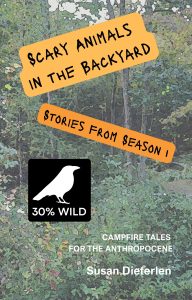
Every coyote, disappearing farmhouse, and Green Man,
Ready for a campfire near you
Plus “No Heroes,” a bonus story only in this e-book
Credits for the original story, “Big Bad Coffee,” included in this podcast episode
“Big Bad Coffee” is an original work by Susan Dieterlen and inspired by the academic job market and by the classic fairy tale, “Little Red Riding Hood.”
Credits:
Theme music by Lost Harmonies
Raven audio recording by Tyler Hulett
Other music by Alitu.
Full transcription of podcast episode
[00:00] Susan: Youre over caffeinated and overthinking after arriving an hour early at the coffeehouse. When he finally arrives 20 minutes late, the umbrella hides his face, but all you see is the suit anyway, or rather the jacket over that inevitable black turtleneck, its houndstooth but subtle, masculine, expensive, just like those thousand dollar jeans. The sandals surprise you, but not as much as the lack of socks. Its a chilly, wet day for bare feet, even ones with that much hair on them. He folds the umbrella, shaking the rain off his shoulders. A word to the pretty barista behind the counter and the flash of a flirtatious grin. The espresso machine drowns out his voice. But what he said must have been charming, because she reaches out and takes the dripping umbrella and lays it on the counter next to the register. Doctor pine wont be kicking a soggy umbrella around on the floor like everyone else in the room. You nudge your own umbrella behind your chair with your foot, trying for subtlety, but somehow youre sure he noticed. He turns and takes in the room, nodding to a few of the tables. A smile and a wink for the women chatting in the corner. They smile back. He steps over, says a few words, and the whole table bursts into giggles. The one on the left even blushes, looking up at him through her lashes. He whistles at her as he turns. The classic two notes descending the coffeehouse lights highlight his long nose, the lush eyebrows, the impeccably manicured goatee all set off by the ears, prominent with points not quite hidden by the perfectly disarranged hair. He ambles your way all the time in the world and hes almost to the table before he looks right at you. Well, he looks at part of you, and then his eyes eventually slide up to your face. Maybe your red wool jacket is too eye catching. His eyes are a surprising golden yellow and they look a bit amused, like hes enjoying making the whole encounter run on his terms. Doctor Pine, you say as he nears the table, rising awkwardly and extending your hand. The umbrella snags your foot and you stumble a bit, lurching forward across the table. Pine catches your outstretched hand in a strong grip, easily capturing your nervous fingers in his warm palm. Careful, miss, he says. Dont throw yourself at me, and releases your hand just a moment too late. After hes set you back on your feet, the women in the corner are watching all this. So is the pretty barista, its doctor. Doctor riding hood, you say, second guessing whether he does in fact realize you are the job candidate hes meeting here today. The smirk says he knows as he nods and takes his chair, lounging with his elbow on the table with long legs stretched out to the side. He more than takes up the opposite side of this table for four, yet he seems even larger. But you continue, all in a rush. You can call me Rose, hating yourself a little for throwing away the title youre due. But this is an interview, after all. Of course, he says. And you can call me Lou. It seems too intimate for a business meeting. Or maybe thats just the gleam in his eye. I double dog dare you, Roxy, he says, winking. You wait for him to play the role of questioner, or at least open with the standard small talk. The pause becomes awkward as he meets your eyes, the slightest suggestion of a challenge or question, a raising of one prominent brow. Thanks for meeting with me. You begin. Although it’s his meeting, pine stretches his arms over his head, scribing a huge arc. You’re supposed to notice the breadth of his chest, but you actually notice his huge hands, thick with hair on the backs. It’s very nearly fur. I’ve always been hungry. Ronnie, you need to be the alpha in this business, not hiding in sheep’s clothing, he proclaims, as though you were not speaking. Apparently you’re talking about him now. People like to say that my bark is worse than my bite, but I say, if you want to win, you’ve got to be ready for every opportunity. I pride myself on always being at the door. He pauses, possibly expecting applause. What were looking for is a go getter. A tiger, not a kitten. Were a program with too many sheep. Although I love sheep personally and smile suavely, like a more handsome man might do. What big teeth he has, and all of them dangerously sharp. What makes you that tiger, kitten? Wait, did he just call you kitten? Not even this wolf would do that in an interview, right? Uh, you stammer, then launch into your standard spiel about your work, taking refuge in the practiced response. His eyes wander back towards the pretty barista. But you’re warmed up now, hitting the points you rehearsed all the way here, bringing it home to the sales pitch. And that’s why the pack partnership is really the place for this work. The next chapter of this work. Pines phone rings with a slinky blues tune. He picks it up, still looking across the room at the corner table. He wiggles his fingers at the women as he barks pine by way of greeting to the caller. Contempt eclipses the flirtatious grin in a flash. What did you say, lamb? You cant be calling me to tell me this is screwed up again? Even you couldnt be that stupid, he growls into the phone. Straw, he barks. What would I want with straw? You know it’s brick. It’s always brick. It’s always been brick. The pig knows that. All the pigs know that. Why don’t you know that, lamb? It’s always the same thing with you, this herd mentality. You’ll never run with the big dogs because you are just too mutton headed. You shift awkwardly. He’s shouting now, voice booming with violence, and the whole cafe is looking. Even his fan club at the corner table looks shocked. No, you listen. He snarls at his subordinate as he jumps up. Im coming over there. Im racing back to save this merger from your pathetic incompetence. Leaving this meeting with he glances back at you, and it is clear he has no idea what your name is. You dont offer it a moment of solidarity with the unfortunate lamb who has said something in the break. No. Pine howls, nearly screaming. Reaching the door in two long strides, he throws the door open. Tell him I’m coming. I’m coming to blow the house down. The door slams behind Pine as he lopes down the street, still barking at his assistant in his wake. The cafe is extra quiet. Patrons look at each other with eyebrows raised and exclamations. The barista picks up the umbrella. Pine has forgotten the one he so charmingly entrusted to her care. She looks at it. She shrugs. Then she drops it in the trash. Quiet conversation resumes. You pull out your laptop and refresh the page of open position announcements, sighing. This job looked like the one, but you were just chasing your tail. It’s a dog’s life. Looking for work? Maybe something new has come up.
I’m doctor Susan Dieterlin, and this is 30% wild scary animals in the backyard. Listen, subscribe and support. 30% wild@thirtywildpod.com dot that’s thirty wildpod.com.
the big bad I bet everyone listening to that just filled in that blanken. It’s wolf. We all know that, and it’s the only scary animal that we say that about. It could be a fairy tale. It could be a cartoon. It could even be a little sketch about meeting an unpleasant colleague for coffee. But we all know the big bad wolf. He’s a stock character. There are so many idioms and sayings about wolves in our language. Like a wolf in sheep’s clothing. Like raised by wolves. You can wolf down food. You can be thrown to the wolves. Wolves have left some really big tracks on the english language. And as a side note, you know, this is really interesting because the last wolf in Britain was killed, they say, in the Scottish Highlands in 1680. 1680 was nearly a century before the American Revolution. But the language endures. We’re still afraid of the big bad wolf. But in reality, wolves are shy and elusive. That’s what people say who know about them, who spend time around them, who study them. They say that wolves are just desperate to stay away from people. They say that you’re likely to not even know if they’re around. Like there may be tracks going by at night or something like that when you’re not home. Tracks may show up, but you’ll never actually see one. And you might hear them howling, but you might not. So, you know, for the general public, if you’re not an expert, that’s how you would know that the big bad wolf is in your backyard. It’s suddenly not all that frightening, is it? Your chances of even seeing a wolf are super low unless you can see it at a great distance, like, you know, out in an open area like in Yellowstone, your chances of being attacked by a wolf are just vanishingly small. It’s far, far, far less by the numbers than that of being attacked by a domestic dog. So, you know, your best friend there sitting on the couch next to you is much more the savage, bloodthirsty killer than wolves are. We’ve seen with the reintroduction of wolves to Yellowstone in 1995 that they really rejuvenate entire ecosystems. And this has been really celebrated. There’s been a lot of coverage about this, and I’ll have something in the episode notes about it if you missed that, or if you just want to know more about it, wolves are meant to be here. They are an essential part of wild North America. And in fact, before settlement began, before european settlement began, wolves lived basically everywhere in the lower 48 or everywhere that would become the lower 48 in the US, in all habitats, in all regions, in the desert, on the prairie, in the forest, all kinds of forests, north to south, coast to coast. They were wolves everywhere. And, well, that changed after we got here. By the mid 20th century. So this is before the Endangered Species act, wolves were nearly wiped out from the lower 48, except for northern Minnesota. And you might not have guessed that that’s where they stayed. And Isle Royal in Lake Superior, and Isle Royal is part of Michigan. So there’s a little trivia for you, a little wolf trivia. That’s where there were remnant populations before the Endangered Species act. And a side note here that when I say that and the whole rest of this episode, we’re talking about the animals that everyone agrees are wolves. And it is surprising that there is some controversy about exactly which creatures are wolves and which are not in North America. And also, if they’re wolves, what sort of wolves they are, what species they are, or subspecies they are, we are not going to get into that in this episode, but I will put something in the episode notes, if you want to know more about it. And in the coyote episode of 30% wild, we may talk a little bit more about that, because sometimes people bring up coyotes that may have some wolf or dog DNA or big coyotes that seem wolf like. And so, I mean, that’s interesting. It’s surprisingly controversial, but that’s another episode, so not in this one. Most wolves that are still living in the US today, so live wild wolves, live in the northwest or the northern Rockies or in the northern Great Lakes. Again, that’s Minnesota. Not just Minnesota. And there are smaller numbers of wolves in Arizona and New Mexico. And there’s just a couple red wolves, which are. Are a little different in North Carolina. And then, of course, Alaska. Alaska has plenty of wolves. There are current estimates of perhaps 11,000 wolves currently, and they have never been rare there. But this may sound familiar to you if you listen to the cougar episode of 30% wild. Those are established breeding populations. So all those places, I just said, that’s where there are established breeding populations and big predators like wolves, they roam. They’re very good at roaming. They can disperse up to 500 miles from established populations into a new area. I mean, 500 miles is a long way. And in recent years, there have, in fact, been a handful of documented wolves and wolf signs, you know, scat that they tested for DNA and that kind of thing. In the northeast, that’s northern New England and upstate New York, I think the Adirondacks in particular. And if you look at this, there are, in fact, established breeding populations of wolves within about 300 miles of that area in Ontario, the area in and around Algonquin Provincial park. So that’s interesting, isn’t it? You know, they’re not as far from the backyard as you might think. And the wolves are really emblematic of wilderness. I mean, of all the scary animals that we talk about here, I think you can make a good argument that wolves are really the wilderness. That’s the way we think of them. And wolves are absolute rock stars. On the Internet, there are. If you look at Internet search data, you see that people are really interested in wolves, there’s all kinds of searches for just images of wolves or graphics that show wolves or just wanting to hear them howl or something like that, whereas coyotes that aren’t really that different, I mean, they’re different in some important ways, but if you’re just sort of an ordinary person looking at them, you might confuse the two. You might not really know what the difference is. Coyotes. If you look at Internet search data, coyotes don’t get any love. I mean, it’s all about, like, how do I get rid of these? Our coyotes are a problem. You know, they’re. I don’t want them in my yard. Are they a threat to my dog? That kind of, like, coyotes don’t seem to have any romance at all for us, but wolves do. So you wouldn’t think based on that, and of course, the big bad wolf, you wouldn’t think that wolves could move into anywhere else in the US that isn’t absolute wilderness. And maybe you’re right, but I want to point out that wolves have made a real comeback in Europe, and their wolves are a little different than ours. But, you know, not for the purposes of this conversation. They’re not that different. This is really tied to rewilding in Europe, and rewilding in Europe has made great strides. There are now the current estimate is about 20,000 wolves across Europe, which is just mind blowing to me when you consider how dense the population of Europe is compared to the US. And this, I’m going to throw some numbers at you. In Europe, looking at all the countries of it, an overall average of population density is 599 people per square kilometer, which sounds like a lot. And it is. If you compare it to the US. Our overall population density is 36 people per square kilometer. So that’s 599 compared to 36. That overall population density for the US probably includes Alaska. It wasn’t clear, but Alaska is part of the US. Even so, I think there’s no question that we have a lot more open space. We have a lot more places without people than Europe does. So if they can have 20,000 wolves, who knows? Where will they turn up next, a quick note before we hear this interview. There’s a technical glitch that you’ll hear once in a while in this recording that editing could not remove. It’s almost always while I’m speaking, so fortunately, it won’t keep you from hearing what my guest has to say. Let’s listen.
[17:27] Speaker B: I think just being startled by wildlife can be frightening and off putting sometimes. But I’ve never come into contact with a wolf. Like every time I see a Wolfenk in northern Minnesota, they’ve ran away so quickly and have been way more scared of them than I have. Been.
[17:47] Susan: With me today is Dani friend, a master’s student in conservation sciences at the University of Minnesota. She’s conducting research at the Voyageur’s Woof project in northern Minnesota under the supervision of Doctor Joseph Bump. Dani’s finishing up her study of the landscape effects of predation, that’s wolves on ecosystem engineers, which is beavers, and also how beavers respond to having wolves around. Wolves and beavers have both really been celebrated in recent years for how either of them alone can reshape entire ecosystems and affect everything else living there. So their interaction is just potentially really important and far reaching an impact. Danny also studies whether wolves fish, which would make them like everyone else in the northern midwest. And she is a collegiate diver and assistant dive coach, so that’s a pretty multifaceted relationship with water. Danny’s going to graduate this spring, and she will be starting a PhD position with Trent university up in Canada. She also has just a formidable set of outdoor skills, including backpacking, tracking animals, and getting around through pretty much any snow based mode of transportation or by boat. If you find out more about any of that, you can follow the link to her website in this episode’s notes on the 30% wild website. So welcome. Danny friend, hi.
[19:17] Speaker B: Thank you for having me and the lovely introduction to.
[19:21] Susan: Oh, you’re welcome. It’s my pleasure. So when you talk to people about wolves, not other wolf researchers, but regular people, sort of, you’re at a party or something like that, what surprises people the most that you tell them about wolves?
[19:38] Speaker B: Well, I specifically study wolves eating smaller animals. So typically when we think of what wolves eat, it’s usually wolves chasing after a large hooved animal like a deer or an elk. And I think just the fact that wolves have a pretty diverse diet, particularly in what I study, so beavers and fish, that’s a pretty interesting fact, I think that tends to catch people off guard.
[20:07] Susan: You know, you mentioned the deer, and the deer just gets me right into one of the kind of big ideas that I’d like to talk about today, which is about wolves in the east. And when I say the east, I don’t just mean the east coast, I mean the midwest and definitely the greatest lakes, like the eastern half of the US. And whether wolves are likely to recolonize farther east than Minnesota, Wisconsin and into Upper Michigan. Or maybe if they’re already here, what do you yourself look at if you’re in a new place, a new landscape, if you were going to guess whether wolves live there or maybe you can’t tell.
[20:56] Speaker B: Yeah, wolves are pretty flexible creatures, I would say. You know, historically, their range consists of most of the United States and Canada and into parts of Mexico, if we’re thinking of North America. And they’re pretty widely distributed across Europe as well and are expanding out there. So I would say there’s a number of different things you think of when you think of, like, prime wolf habitat. And one of them in particular is a prey base. Wolves have historically been considered obligatory ungulate predators, so they rely heavily on those hooved animals like moose, deer, or elk. So I would probably consider that as one of the first things when I’m thinking of places that. Where wolves can occupy. But we also know they eat a number of other things, too, like beavers and fish. So I would look at that as well. And probably another factor that I would heavily consider is human tolerance and human presence. You know, wolves do a little bit better when there aren’t as many people around, particularly if people are hunting and trapping them. That varies depending on where you are and the impact on the population. But those are probably the two main things I would look at from the outset.
[22:23] Susan: I think that wolves are really an icon of wilderness, and they seem kind of remote from our lives, maybe even like they’re almost a mythical creature, more than real live animal. And I wondered about that. Do you see them living near houses, near roads, you know, other human development?
[22:49] Speaker B: Yeah. So we kind of, where we do our fieldwork is actually somewhat of a resort community because it’s on the edges of this really beautiful lake system, and there are kind of these larger swaths of land that aren’t as heavily occupied by humans. I’m living in the Twin Cities now. So, like, as a comparison, there are certainly different spaces, but there are wolves that go into people’s backyards up there. They’re moving through the landscape for sure. And there’s been studies that have shown that linear features, so, like roads and hiking trails, actually facilitate wolf movement. You know, wolves, similar to humans, will take the path of least resistance. And roads have way less trees on them and things to get in wolves way. So they’re certainly around in the communities that we work in and are very present.
[23:42] Susan: Wow. Okay. That really has captured my imagination. I live in Connecticut, and behind my house there is a hiking trail that goes through the woods. I live in a wooded area, and we have no wolves here. As far as I know. But we have lots and lots of coyotes. And you see the coyotes using the trails and, you know, just trotting right along. And you also see them, especially when there’s snow and you see their tracks, you see that they walk down our driveway back and forth. And I guess in that way that wolves are the same. They do the same kind of thing.
[24:18] Speaker B: Yep, absolutely. And yeah, we’ll get wolf locations in, you know, people’s driveways similar to what you found, and sometimes around our own houses up there, so. Yep, they’re definitely around.
[24:31] Susan: Wow. How would you know? If you say, if I was to move someplace that had wolves and I didn’t realize they were around, would I know? Short of just seeing in the backyard?
[24:47] Speaker B: Yeah, probably not, I would say, unless you’re looking for tracks in here, which is what we do in the field very often, or if you set out, you know, a remote camera. But no, they typically don’t leave that much behind them unless they’ve killed something. And even depending on what they’ve killed, kind of depends how much they leave behind.
[25:09] Susan: I saw in one of the something on the voyager’s wolf project website saying that it’s really hard even for research techs to. So, yeah, even for research technicians to identify wolf kill sites during the summer. And they note that it’s hard for anyone to see the wolves because when, you know, trees are fully leafed out and they’re shrubby, understory and things. And it occurred to me, you know, that’s when most people are in the outdoors. So there are, comparatively speaking, a lot of wolves in Minnesota compared to what there might be if they were moving into new areas. How would you know if this animal was around?
[25:57] Speaker B: Yeah, yeah. I’ve spent the past four summers up there, about seven months out of the year, all summers, and I only see wolves like once maybe running down the road. I know it’s actually quite, when it’s like the species that you study, I would love to see them more often. And I was just out in Yellowstone where we saw wolves every day. And I was like, this is different than northern Minnesota because the landscape is super open. So, yeah, yeah, you rarely. I rarely see them and I spend a lot of time out there. And so it does take we. It takes about three months to train texts on our project to find fawn kills is specifically what they’re looking for. And you can imagine a fawn, they’re pretty small and they’re kind of. A wolf can eat the whole thing. So when you’re trying to find just a speck of bone in the forest. It takes a lot of effort and a lot of training to be able to do that.
[26:51] Susan: Yeah, I’m sure. I’m just kind of distracted by the idea of a wolf just gulping down.
[26:57] Speaker B: Oh, yeah.
[27:00] Susan: So, dear, I have read that some experts think that the overpopulation of deer in the eastern half of the country is really an enormous ecological threat, partly because deer tend to eat. They really like young oaks, like oak seedlings and oaks are really important ecologically to eastern forests and other ecosystems. We have a lot of deer out here. A lot of deer. Deer are important to wolves. There are wolves as close as well, upper Michigan and also some in Canada. What do you think? Do you think that wolves will return to the east?
[27:52] Speaker B: There’s definitely suitable gray wolf habitat, particularly up in, like, Maine and Vermont in upstate New York. So they could be there, I think, and live there. In terms of deer regulation, I think that’s like a really complicated topic, actually. And I think, you know, when wolves were reintroduced in Yellowstone, there was that whole story of wolves changing rivers through trophic cascades by killing elk that are eating aspen, which then there’s more aspen after wolves have killed the elk, which restore these riverbanks. And those researchers got a lot of attention for that because I think it’s a very easy to communicate story. But science is often more complicated than that, which is what they also found to be the case. And some researchers are working on looking at those findings again still, and they have in the past as well. So, yeah, I would say it’s pretty complicated. And, you know, I think wolves often get put into this kind of box when they’re part of a larger ecosystem along with their prey. But, yeah, I think wolves potentially, they’re suitable habitat out east, so they could come back, it seems, from what we know.
[29:14] Susan: Would that habitat be a deep forest or are they more forest edge creatures?
[29:23] Speaker B: Yeah, I would say wolves can occupy a wide range of habitats and we can just see that with their current distribution in Minnesota, out west, over in Europe, in the southwest, which is really different than the rest of wolf range in the US. So, yeah, they’re kind of really flexible carnivores, I would say.
[29:44] Susan: I suppose maybe the wolves are where the deer are or where the beaver are or where the moose are, you know, whatever they’re preying on. And perhaps it doesn’t matter so much to the wolves what, you know, tree canopy is or cover.
[30:01] Speaker B: Yep. Yeah. And I would say also denning availability. So spots where they can have their pups and raise them is important as well. But to have pups, you need to have a stable prey base, you know?
[30:17] Susan: So one of the kind of big ideas on 30% wild is about rewilding. Does anything come to mind when you think about that, about places that have been allowed to go through natural secession back into forest or into shrubland or old fields and farmland or something like that? Can you think of any place like that where wolves are present in those landscapes? It strikes me maybe that’s true in northern Minnesota. I’m not that familiar with that part of the upper Midwest.
[30:57] Speaker B: Yeah. So they just reintroduced wolves back to Colorado last year, and then wolves are naturally recolonizing Washington state. And I’m from Washington state, so I particularly follow their wolf project out there, and I think it will be interesting to see how those populations spread out west in terms of the Midwest. You know, the DNR has stated that Minnesota’s gray wolf population has basically remained stable for the past ten years, with most of the areas of suitable habitat in the state being already occupied. So according to the Department of Natural Resources, it seems like they’re not expecting wolves to colonize further south. But we’ll see. You know, we’ve had wolves disperse pretty far from our study site, which is right next to the canadian border. So as far north in Minnesota as you can get. And I think it will be interesting to see how that occurs across the rest of the midwest.
[32:01] Susan: Is there something that occurs to you that, where the Minnesota DNR is saying, okay, the wolves aren’t, we don’t expect them to move any farther south along this. What is that line? Not specifically geographically, but is it maybe where there’s less forest or there’s more people or across a river or something like that?
[32:24] Speaker B: Yeah. So first, the southern distribution. It’s actually just north of kind of Minneapolis. For those of you people that are familiar with where Minneapolis is, it’s kind of in between Minneapolis and Duluth. And then for out west on the western side, you know, that gets pretty flat out there and barren in the Dakotas. So I don’t know if wolves were to reoccupy the Dakotas, they might come from Wyoming or Montana just because the western side of the Dakotas are a little bit more kind of rolling and forested, but yeah. And we’ll see.
[33:04] Susan: If somebody who lives in, let’s say, between the twin cities and Duluth. And I am interested in either making wolves at home on property, or maybe the opposite, trying to not make them at home on my property and kind of reduce the chances they will be there. Is there anything I could do about that? Does that make sense, like, as far as kind of the landscape management, night lighting, that kind of thing?
[33:40] Speaker B: Sure. Yeah. And I would say that’s kind of a good question of how to coexist with wolves in your home setting. And I know, like, at national parks, oftentimes, if you like, are familiar with how to manage bears at a campsite, that’s also how you want to manage wolves with food. And that’s just like general wildlife. You know, you don’t want to leave, like trash out or anything, if you can, that will attract, you know, little creatures coming onto your property. And also just generally for wildlife on property, you know, those lights in backyards are in your house. Flooding the, the area is usually will deter anything. So, yeah, I guess it depends if you want wildlife on your property or not. But usually minimizing human disturbance and interaction is a good way to, is a good kind of first step.
[34:35] Susan: That is not so different from if you live someplace where there are raccoons. Nearly all live places where there are raccoons. They’re. They’re omnipresent. And I. And you want to not have problems with friends. I mean, it’s basically the same advice. And that just seems, that’s really startling that, like I said, this sort of, you know, the big wolf is actually attracted or repelled by the same things that the little trash pandas are attracted or repelled by.
[35:07] Speaker B: Yeah. And I would say even on our remote camera. So we have a bunch of trail cameras out in our study area trying to capture videos of wolves. And I would say wolves are actually even a little bit more reactive to human activity than other creatures. They’re just very skittish animals in general. So, yeah, any sort of human activity is going to put them on alert and deter them from your property.
[35:34] Susan: Yeah. So probably most of the people listening to this episode do not live in areas where there are wolves or don’t think they live in areas where there are wolves. And so other than it is always good advice to not have so much, you know, night lighting outside if you want to help out wildlife. Is there anything else that people listening to this can personally do that would help wolves.
[36:12] Speaker B: Just like, on their property.
[36:13] Susan: Or generally any way you want to answer it? You know, whether it’s. Does it make any difference, I guess, but what listeners do, I guess, personally?
[36:26] Speaker B: Yeah, I think because wolves are such a polarizing species and they do carry such a big cultural weight, probably the best thing that people can do is educate themselves and just read more about wolf biology and what type of animals they are and their behavior and how they react. And I think that’s the best way to form their own opinions about an animal and start asking interesting questions about them, too, because I think that’s really important. Part of communing with the outdoors is, you know, asking personal questions that you’re interested in.
[37:05] Susan: Oh, I love that. So, as I said in the introduction, you have just a very impressive resume of outdoor skills. I would say that. And you have had an array of impressive outdoors oriented jobs, too, like research positions and that kind of thing. So it seems reasonable to say that you’re very comfortable in the outdoors.
[37:34] Speaker B: First off, thank you for reading my cv. That was very thoughtful of you. But second, I would say, yes, I feel pretty confident in the outdoors, but I always, every time I go outdoors, I find myself surprised by something I think is maybe a good way to put it.
[37:55] Susan: And you also study wolves, which are definitely one of the kind of scarier creatures that we have in the US. What would be, have be frightening experiences with wolves?
[38:10] Speaker B: Yeah, great question. I have not, I think, in the general sense of what you would imagine a frightening experience with wolves to be based off of little red Riding Hood and these other stories that a lot of people in the west have grown up with. But I think just being startled by wildlife can be frightening and off putting sometimes. But I’ve never come into contact with a wolf. Like, every time I see a wolf in northern Minnesota, they’ve ran away so quickly and have been way more scared of them than I have been. I did come across once we were hiking to a place we knew a wolf had been, and we thought that wolf had left the site based off of some gps locations we had from a collar around its neck. And we came across kind of like a wolf pup that was a little bit older, it was a few months old, and it was really cool to see that wolf pup. But it, like, surprised me so much that I would say that it kind of frightened me. You know, I think when you spend a lot of times in the wilderness, particularly by yourself, which is how a lot of my fieldwork is conducted, you just tend to be on edge a little bit more. But the wolf puff ran away and it was very cool sighting. I haven’t personally come into contact with wolves and ever been frightened. There’s only actually been, in Minnesota one wolf attack on a person. That was in 2013. And from the reports, it had, I think, a broken jaw and was having struggle like, they hypothesized that the wolf was having trouble hunting and came upon this young man that was camping and laying outside right by a creek where the wolf had been scavenging fish. And the person who was camping got bit by the wolf but didn’t die. So, yeah, it’s very rare for wolves to attack people, and there’s never, I don’t think there’s ever been a case of actually someone dying from a wolf attack in the United States.
[40:22] Susan: Frankly, if you see a wolf, you are really lucky, and you should view that way that you are really lucky for having seen this elusive creature.
[40:34] Speaker B: Yeah. And I would totally get the fear of seeing wildlife in general when you’re out in the forest, especially if it’s something you’ve never encountered before. And I think, you know, the best way to kind of prepare yourself for any sort of potential wildlife interactions is just figuring out what you should do beforehand if you come across that. And that’s like going back to also, you know, not leaving food around a campsite or anything. And so just, like, mitigating any potential conflict. But, yes, I. Every time I see a wolf in Minnesota, I’m pretty excited about it because it is a pretty unique experience.
[41:15] Susan: Yeah. Are there, so you’re comfortable with wolves? Are there other wildlife out there that sort of freak you out? Or I guess what’s. What would you say is the scariest creature in the woods in the eastern half of the US? So not, you know, like polar bears?
[41:34] Speaker B: Yeah, sure. I would say humans, but I think I. When you’re hiking around in the forest alone and you’re spending a lot of time out there by yourself, it’s more unsettling to come across another person than wildlife because you know that the wildlife like this is their home, but it’s not usually where people live. So I’m more afraid of people that I come across in the forest. But, you know, we come across black bear pretty often. We always carry bear spray, which is important, and regularly make noise to frighten them away. I’ve seen a moose once in Minnesota. Minnesota. And I happened to be, like, playing out loud something on my phone, which was actually pretty lucky because the moose heard me before I saw it, because I was coming around, like, this small hill, and I just had no idea it was there because they’re surprisingly quiet for such large creatures. But that was afterwards pretty interesting, cool interaction. That turned out well for me, honestly, when I was in Yellowstone, like, bison were you, I had never really been around bison before, and I had never heard a bison before. And, like, the first time I heard a bison, I didn’t see it at first, and that was pretty unsettling, but they’re really cool creatures, too.
[42:54] Susan: So was it.
[42:55] Speaker B: I don’t know if that was your question, but.
[42:57] Susan: Oh, definitely, yeah. Did you hear that sort of rumbling sound that.
[43:01] Speaker B: Oh, yeah, totally. And I had never heard that before, and it was absolutely amazing, but it startled me at first.
[43:09] Susan: So are there other things that concern you, other worries you have when you’re out in the woods that maybe aren’t wildlife based? I guess thinking about, as someone who’s very comfortable in that environment, spends a lot of time in it.
[43:25] Speaker B: Yeah. And I think maybe this would be a good thing to point out. I actually didn’t start really spending a significant time outdoors until I was in college. So the first time I went camping was when I was a sophomore in undergrad. I had spent. I had, like, gone hiking before, but not, like, camping or anything like that. And so it wasn’t kind of till later in my life that I got into really, like, spending a lot of time self where you’re, like, taking care of yourself outside, you know, like, I didn’t have, like, a bed to go back to or you don’t have a bed to go back to. And so that was kind of interesting. I joined. I went to college for pre med and then ended up switching to wildlife biology after I spent some time outside doing fieldwork. And I realized, wow, I really like spending time outside, and this is what I want to be doing for the rest of my life. And so that’s when I switched to kind of wildlife biology. And I think that’s important to point out because, you know, there’s often a lot of stigmas of spending time outside later on in your life or, like, not having experience already. And I definitely felt that, particularly in the wildlife field, where it can feel like people have, like, these amazing outdoor experiences from the time they’re a young. From. From when they’re young. I think it’s important to, like, find this safe space of people who are willing to teach you these outdoor skills, and you can do it at any time in your life. It doesn’t have to just be something that you were taught from your parents later on. But I think going off of that to your question of what else kind of scares me. I think for a long time, I felt like I didn’t have the right skills. Like, I would be kind of if I was, like, going on a trip with a group, like, I didn’t know what I was doing, and I was going to be a burden to that group, you know? And I, like, definitely went on this trip to the boundary waters. It was like a canoe, multi day canoe trip, and I had never been on a multi day backpacking trip before, and this one was water based, so we were canoeing. I was also the only female in the group. And you had to hang your food for a bear bag, which I had never done. And I kind of lethem that my fears of, like, being dead weight, like, a bear bag, overwhelmed my experience there, which is kind of unfortunate, but, yeah. So I think that was a big fear I had and probably still have, even though I’ve spent a lot of time in the outdoors. I don’t know if that answers your question, but.
[46:04] Susan: Oh, no, I think that’s a great answer. That’s very insightful. That I would say. I would summarize what you just said is, basically, you’ve worried about kind of not being up to the challenge of doing these outdoor experiences. Yeah, that’s really. Yeah, I think that is. It’s very insightful, and I think a lot of us feel that way, especially as we get older, a lot of us feel that way. What you just said kind of puts us in a new light. But have you ever had something just weird and unsettling happen and in the wild, I guess, in the woods or in the outdoors that you couldn’t explain?
[46:53] Speaker B: Yeah, this is a good question. I don’t have a particular event that has happened. I think last summer when I was in the field, I was watching a lot of scary movies, and there are just some days where you’re out. I was out there, and I was just like, you know, today might be the day I find a dead body out here. Like, I would just, like, let these scary movies kind of really frighten me. And, like, while I was in the forest and just, like, really be on edge, which then, you know, then all of a sudden, you start to see random stuff, like, at the edges of your mind. Cause you’re, like, letting your imagination run away with you. But, yeah, I still have days like that where I’m like, I don’t know, today’s a creepy day out here in the woods. But I wouldn’t say I have, like, a particular event where, like, something really weird has happened that I’ve not been able to explain. But I definitely let my imagination get the best of me, and sometimes I listen to it, and sometimes I don’t, just because I think sometimes it’s good to trust your gut, depending on the situation, particularly if you’re out in the wilderness by yourself. But, yeah. So just.
[48:07] Susan: That’s it.
[48:08] Speaker B: Yeah.
[48:09] Susan: You know, that’s a really good point. That feeling of being on edge, even if it’s something that’s sort of irrational, I guess. It’s not totally irrational. The idea that you might run across a dead body, but it’s not very likely. Right. Yeah. That if you are on edge and sort of extra vigilant, even if it’s because you’re worrying about something, you know, something irrational like that, that might be telling you something, that maybe you really are out of your comfort zone, or maybe there is something else about the situation, like you’ve kind of. Maybe this trail is kind of too hard for you or something like that. I’ve run across a surprising number of people who were trained for a triathlon, like their first triathlon, who had this fear about swimming in lakes, that they were going to be swimming along and look down and see a body in the lake. And I do not. I’m not afflicted by that fear myself. But it just seemed really strange to me that it was not just one person, like, the first person who said that to me. I thought, okay, that’s odd to, you know.
[49:36] Speaker B: And I think also, it’s, like, worth recognizing those spheres because I’m for people, right? They come from all different places. And when I’m, like, feeling particularly creeped out, I don’t know if I watched, like, a scary movie or just overthinking things, you know, I’ve been trying to be a little bit more patient with myself and, like, adjusting and being just like, okay. It’s okay that I feel, like, off today. I’m just gonna let be a little bit more, like, maybe I’ll check in more often with the rest of my crew, you know, just to make me feel safe. So I think even if they’re things that are not likely to happen, they’re, like, totally valid to still kind of, you know, adjust to, you feel comfortable. Because I think in the past, I was kind of, like, embracing the machismo of the outdoors, and that is just, like, totally unnecessary, I’ve discovered as I’ve gotten older.
[50:33] Susan: But, yeah, I think it’s okay to admit to yourself and to other people, actually, that some days you just feel a little less capable than other days, particularly with anything physically demanding. And that might be what some of that, you know, feeling easily frightened by things is. Is really about that you just kind of feel maybe. Maybe physically or maybe, I don’t know, emotionally less capable of taking on challenges on that day. And that’s probably a good, a good lesson for, well, any kind of resilience, but definitely resilience in the outdoors that you want to know your limits.
[51:20] Speaker B: Yeah, yeah, totally. And it’s good to push those limits within reason, for sure. And that’s something that I really enjoy doing when I can. But, yeah, you know, it’s also most important to listen to yourself and how you’re feeling in a specific situation, especially if you’re out there, maybe, you know, far, far out there, and it’s difficult to return to your home or wherever, shelter, food, whatever.
[51:47] Susan: So how do you see climate change affecting the wolves that you study?
[51:53] Speaker B: I would say look at Wolfenhe prey because, you know, those larger ungulates, even smaller species, may be more heavily impacted by climate change in some parts of wolf range. They heavily predate caribou in Canada, and caribou are, you know, really at risk of climate change affecting their populations. So, yeah, I would say in the, if you’re wondering about how wolves are going to be responding to, you know, anthropogenic forces that are altering climate, look at how their prey are responding in the winter when wolves are mostly eating those hooved animals. If it’s a good winter, wolves tend to have an upper hand over those hooved animals because it’s really hard for, like, deer to walk on snow when they’re like, they’ve got these like, skinny little legs. So we call it post holing, basically, when they’re breaking through the top surface of the crust, makes it really hard for them to move. Whereas wolves have these large paws that act more like snowshoes where they can, you know, bound across the top of that snow so they can move a lot faster. And also there’s less forage available for ungulates when there’s heavy winters because they eat plants. And so the combination, you know, of wolves being able to move more easily across the top of the snow, there’s less forage for deer or whatever prey they’re eating, puts those deer at a particularly vulnerable state to be eaten by wolves if it’s a really good summer or winter, which means there’s maybe less snow. Good in air quotes, you know, less snow depending on if you’re a winter person or not. I would say when there’s less snow, you know, there’s more forage for ungulates. Wolves don’t have an upper hand because those ungulates can move around because they’re not post holing. It’s a bit harder for wolves to eat those, their prey, those large prey. So I would say that’s like a general overview of, you know, winter severity and how it impacts wolf predation.
[54:03] Susan: So, you know, one of the. One of the surprises about living through climate change as we are is that sometimes there are these odd little benefits that occur to different species that you would not have expected. And it doesn’t make climate change good, but it just means that, well, it’s a. It’s a big change and there’s lots of different effects, and every once in a while there’s one that’s kind of a little win for. For some organism or another. Is there anything like that with wolves that they’re sort of benefiting from climate change?
[54:39] Speaker B: There has been some studies looking at are wolves buffers to climate change because they kill these larger prey, which then, you know, they leave a carcass behind them which a whole suite of scavengers can use and eat. So if these scavengers or other species that are eating these wolf killed prey, their other food sources are being impacted by climate change. Do wolves as a species kind of help supplement their diet and this like missing these missing food sources that they would have otherwise by leaving a lot of carcasses across the landscape that they can use?
[55:22] Susan: You’re saying that having wolves in the landscape or in the ecosystem kind of makes. It kind of strengthens it as a whole, like strengthens the ecosystem as a whole, so that everything in it is more resilient to the stresses of climate change. And one way is that there’s maybe other things for other scavengers to eat because of these wolf kills.
[55:54] Speaker B: Yeah, I think that’s what the paper was getting at, is kind of, you know, having wolves on the landscape maybe creates a greater resilience for other species to these kind of big swings in climate.
[56:08] Susan: Thanks very much to my guest today, Danny Friend, a grad student with the Voyageurs Wolf project in Minnesota. For more about Danny, the project and a lot more about wolves, take a look at the episode notes on our website. 30% wild Scary animals in the backyard is created by me, doctor Susan Dieterlin, and is a product of deft Space Lab. All parts of this podcast are copyright protected and may not be duplicated or used without express written permission by the creator.